We awoke to a cold and gray day in Nebraska. The weather forecast at breakfast emphasized several rounds of snow moving through the region throughout the day. We bundled up and headed north. The view was initially a flat, river valley. Nebraska had way more rivers and creeks than I would’ve imagined.
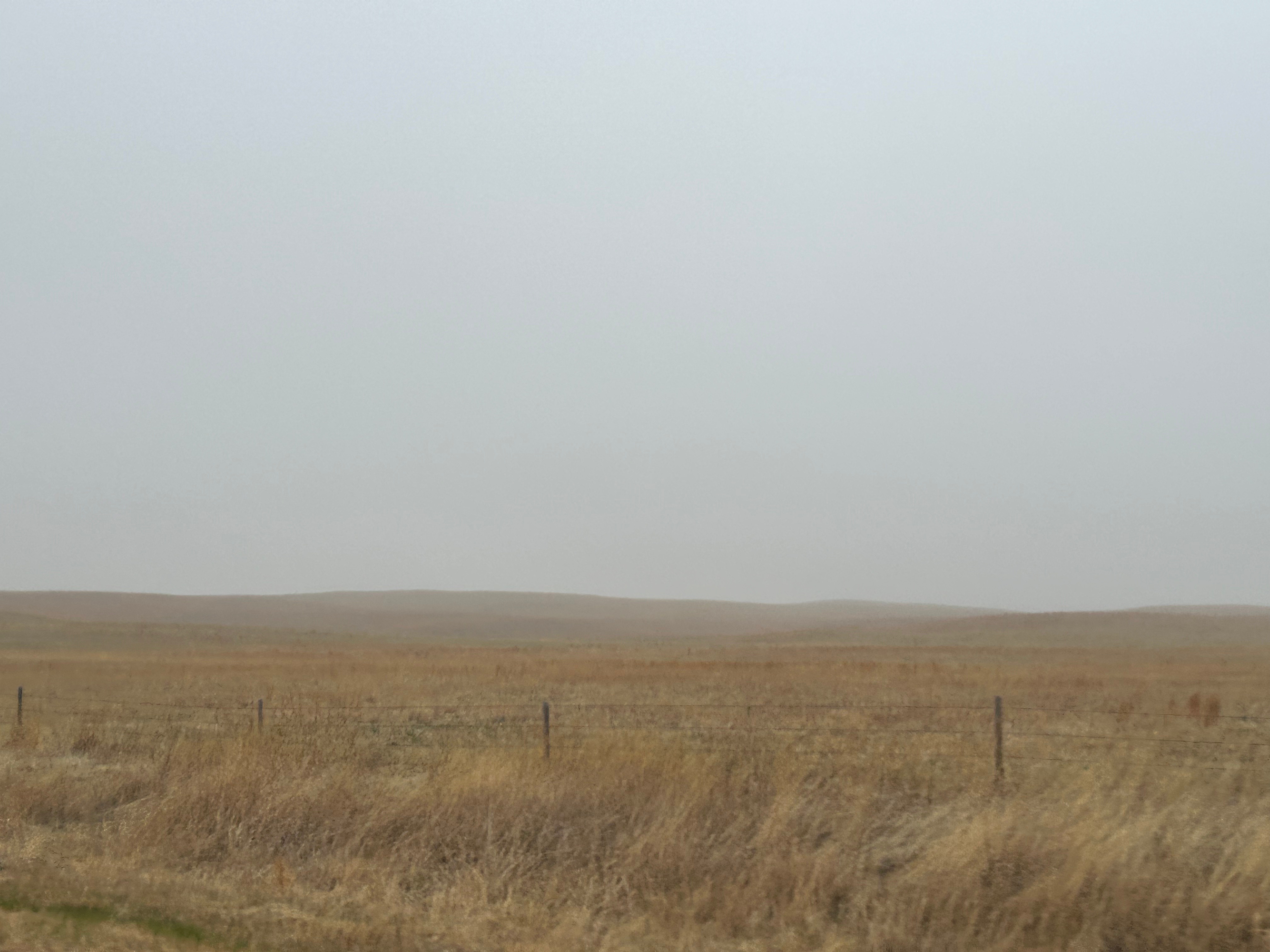
Soon, the landscape changed to rolling, sandy hills. Thom pointed out that it almost looked like dunes in a desert except for the grasses growing on the hills. Turns out, we were in an area of Nebraska known as the Sandhills Region. Apparently this area covers nearly a quarter of Nebraska and is the largest grass-stabilized sand dune field in North America. As is often the case, this picture doesn’t really do it justice, and the weather made pictures a little more challenging.
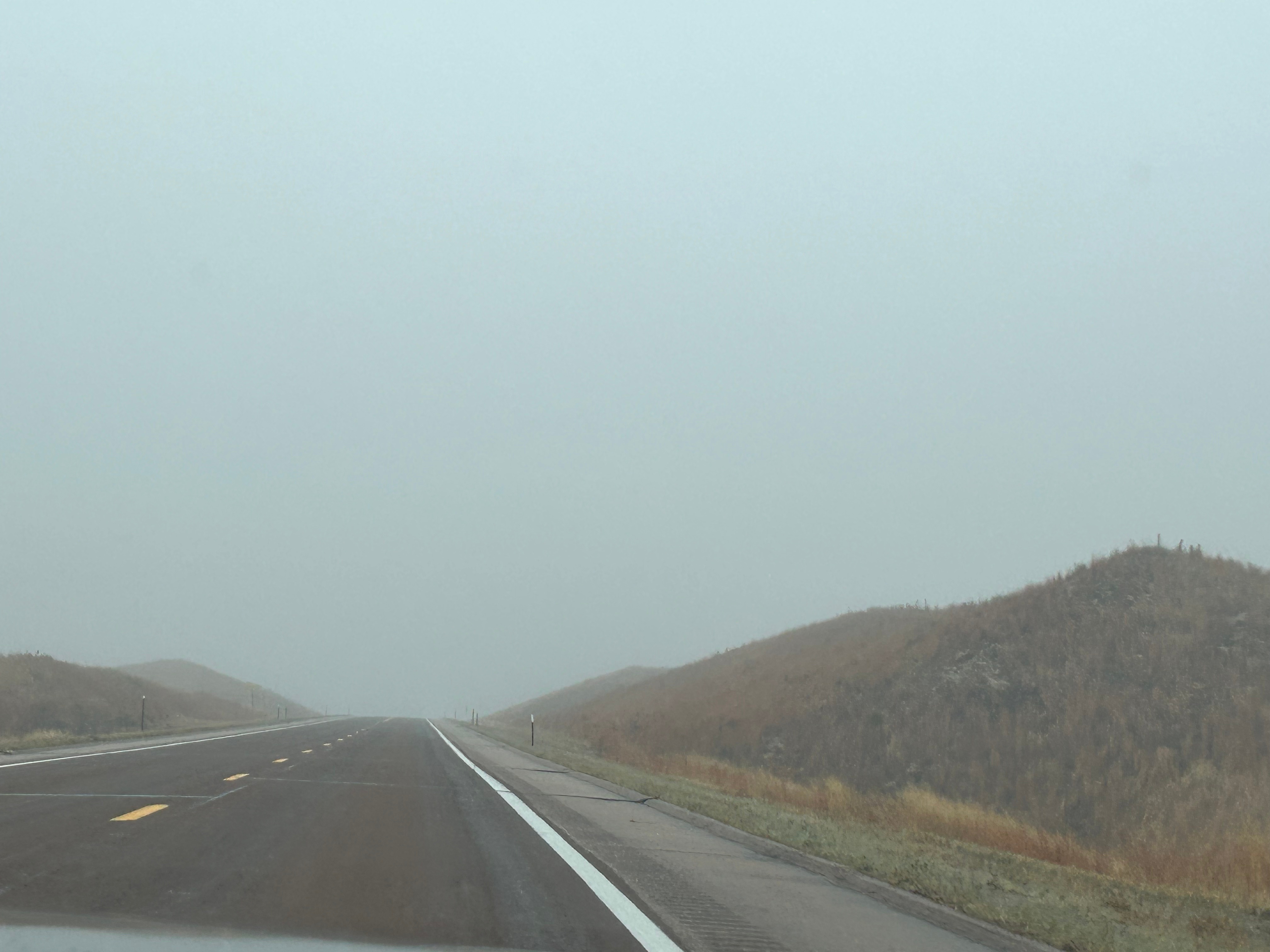
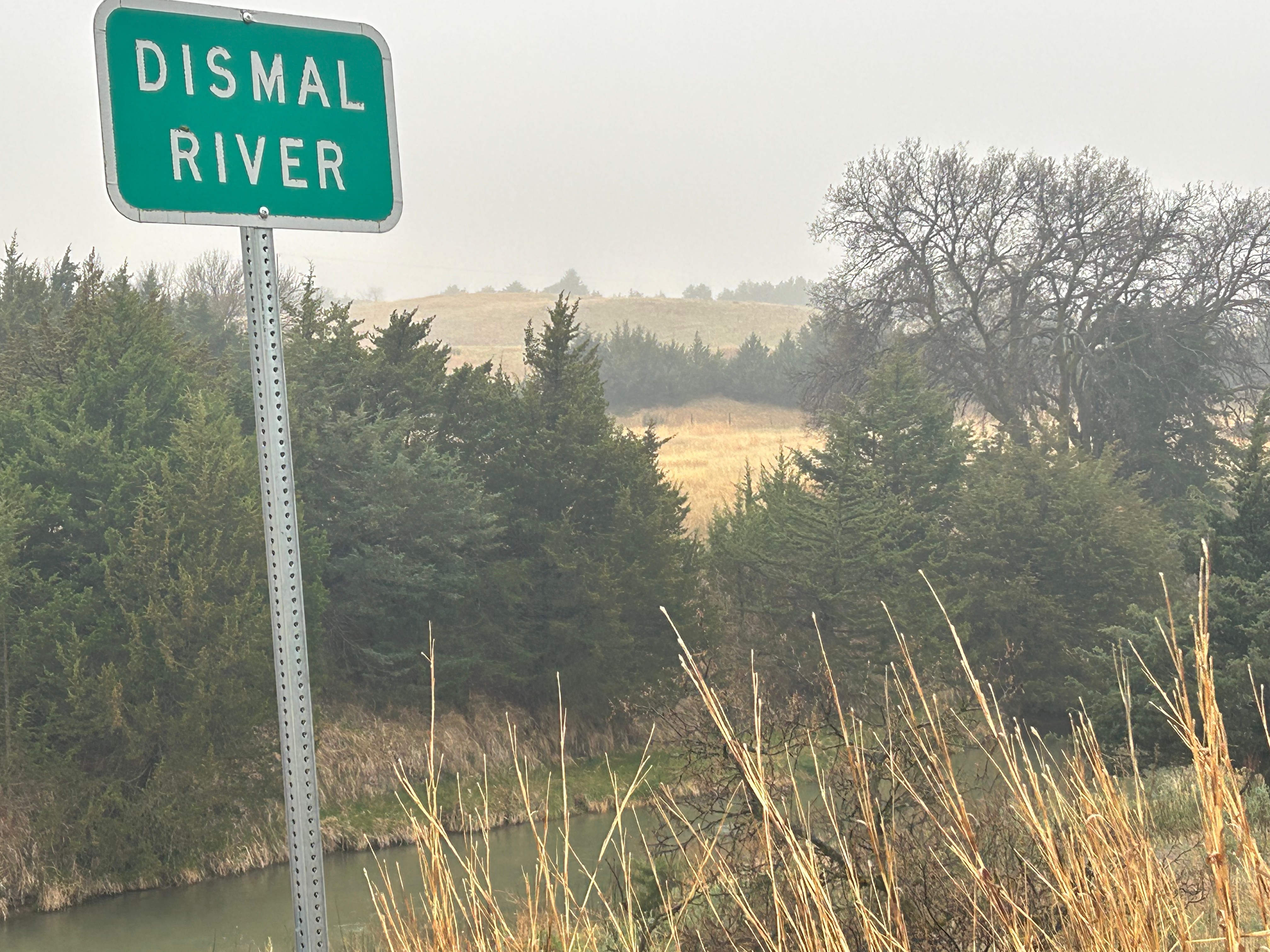
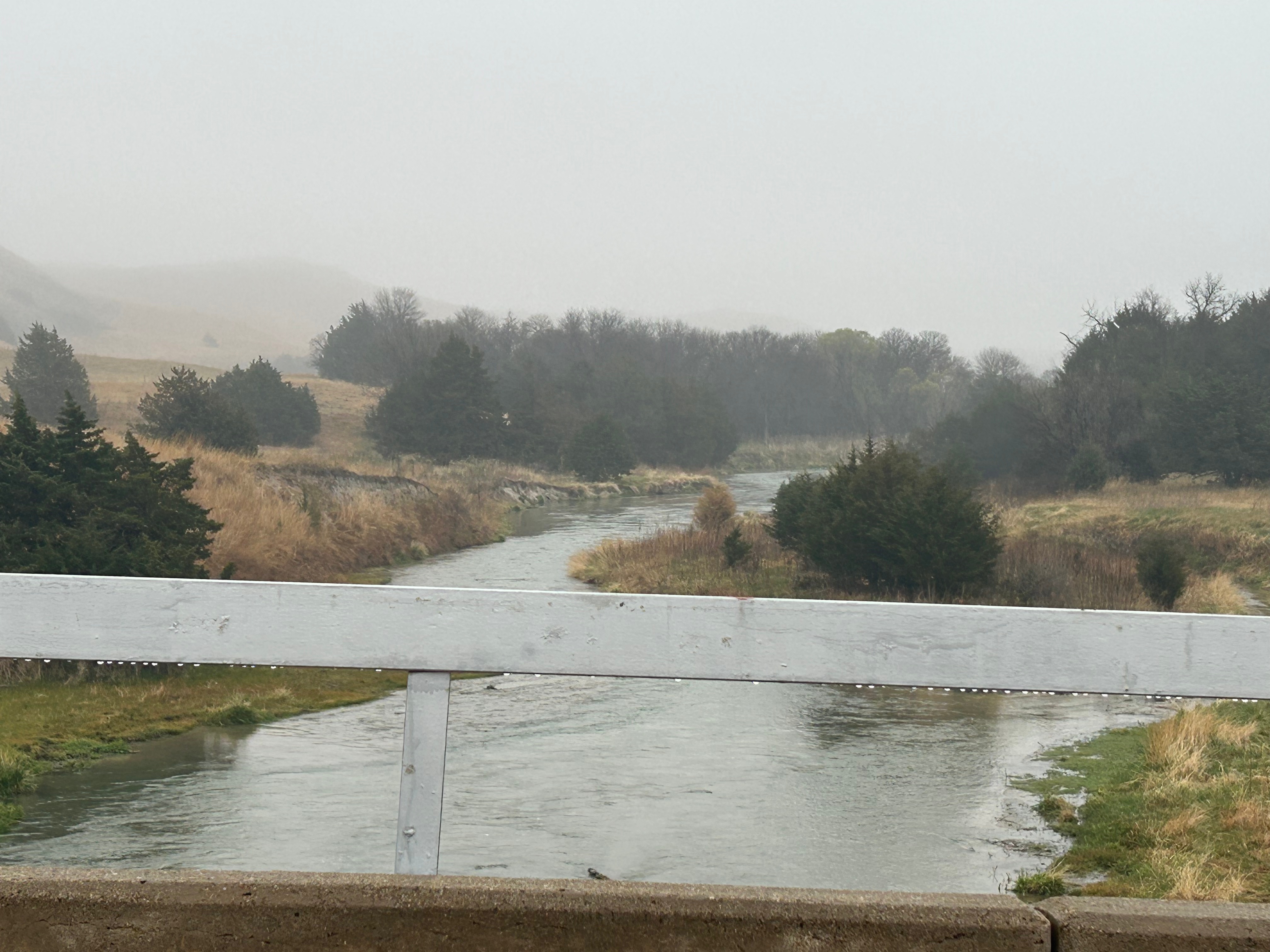
It was detour time when we saw a sign for a “scenic overlook”. It took us on a small backroad loop and, best we could tell, the scenic overlook was the bridge over the comically-named Dismal Creek.
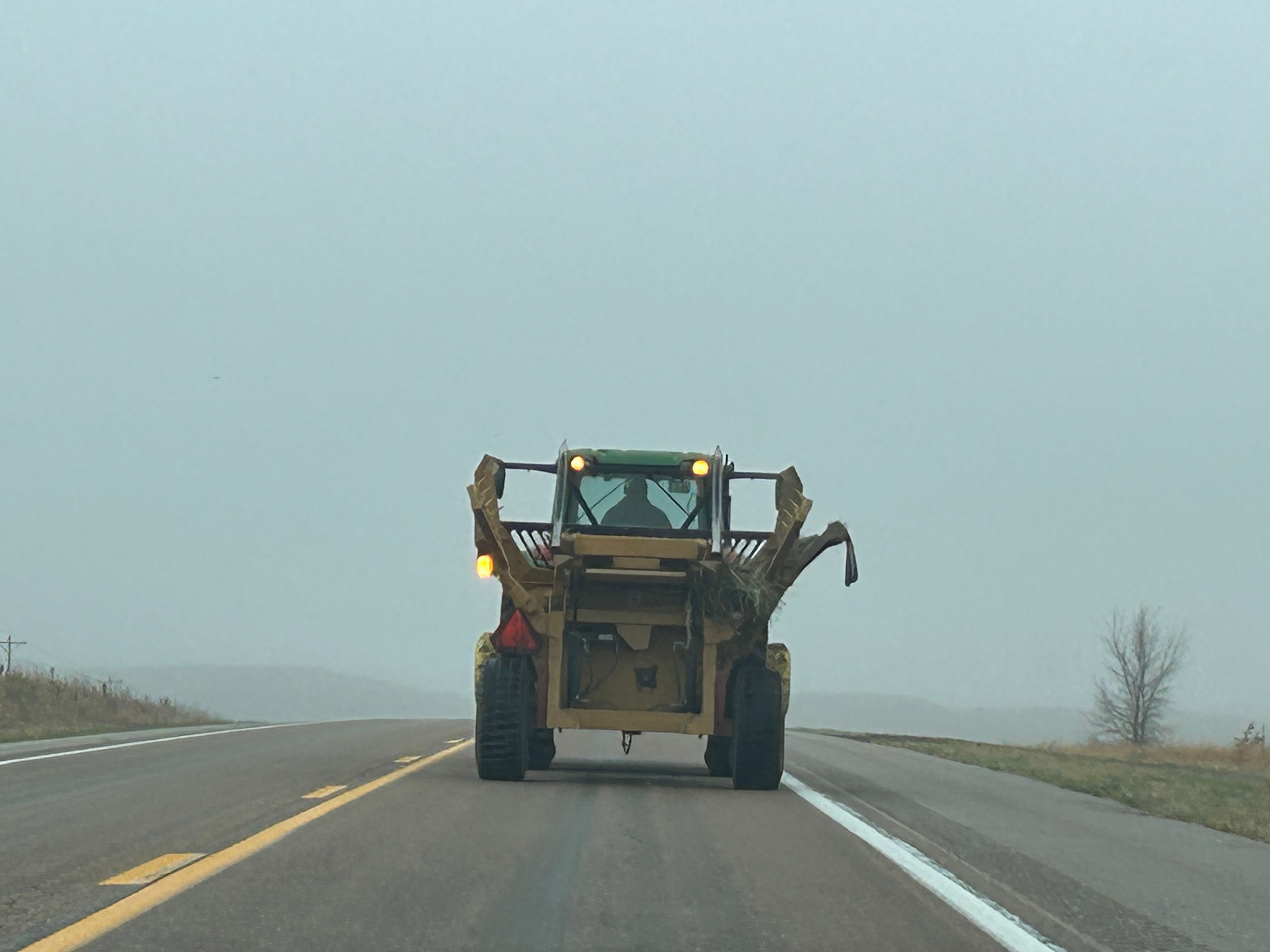
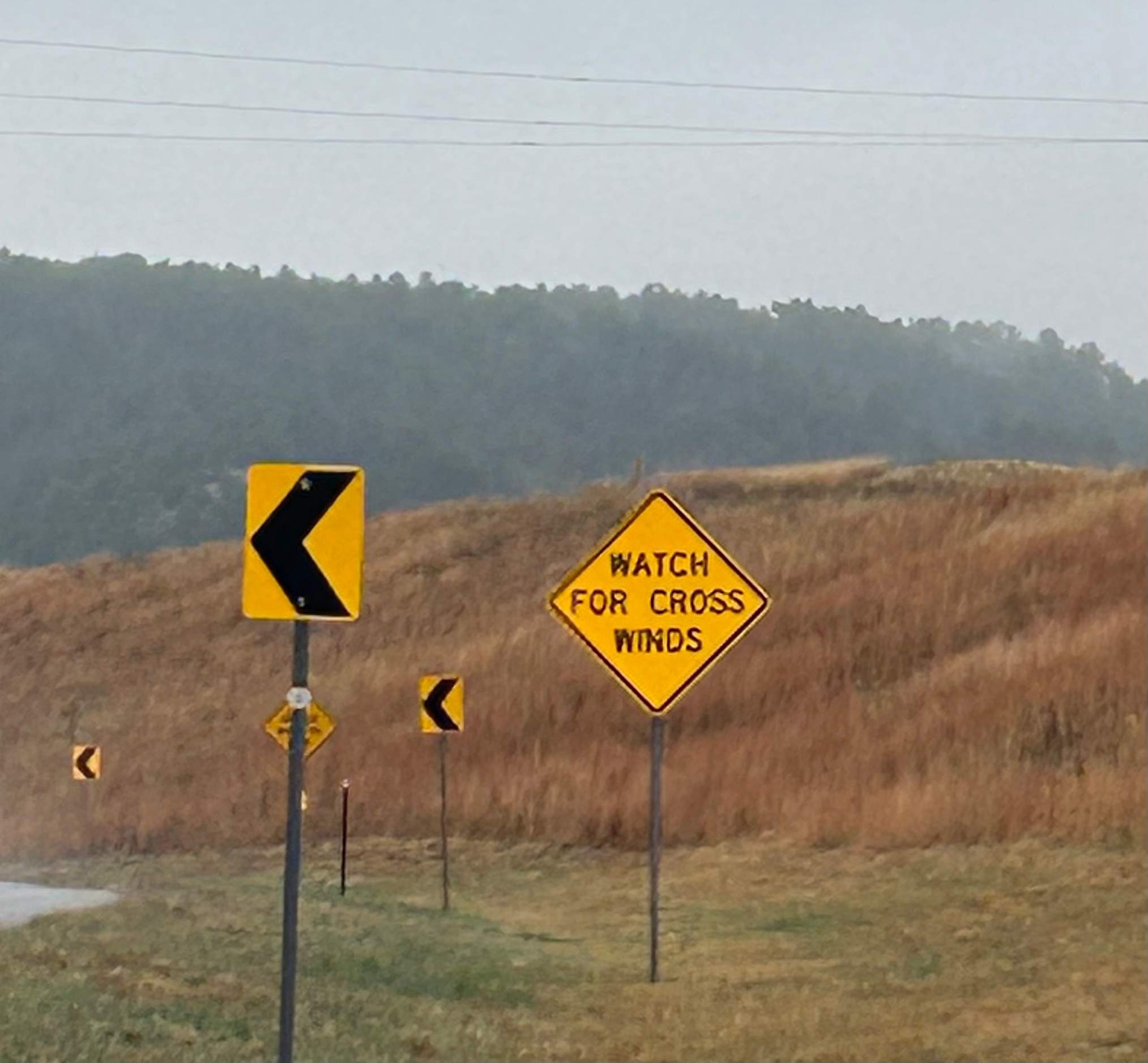
Other oddities along the last bit of Nebraska featured tractors tooling lazily down the highway (easy enough to get around since there were very few people on the road). We also had a good laugh over the “Watch for Cross Winds” signs. We saw these the night prior as well, spurring conversation about how you can’t watch/see wind. The warning was duly noted regardless.
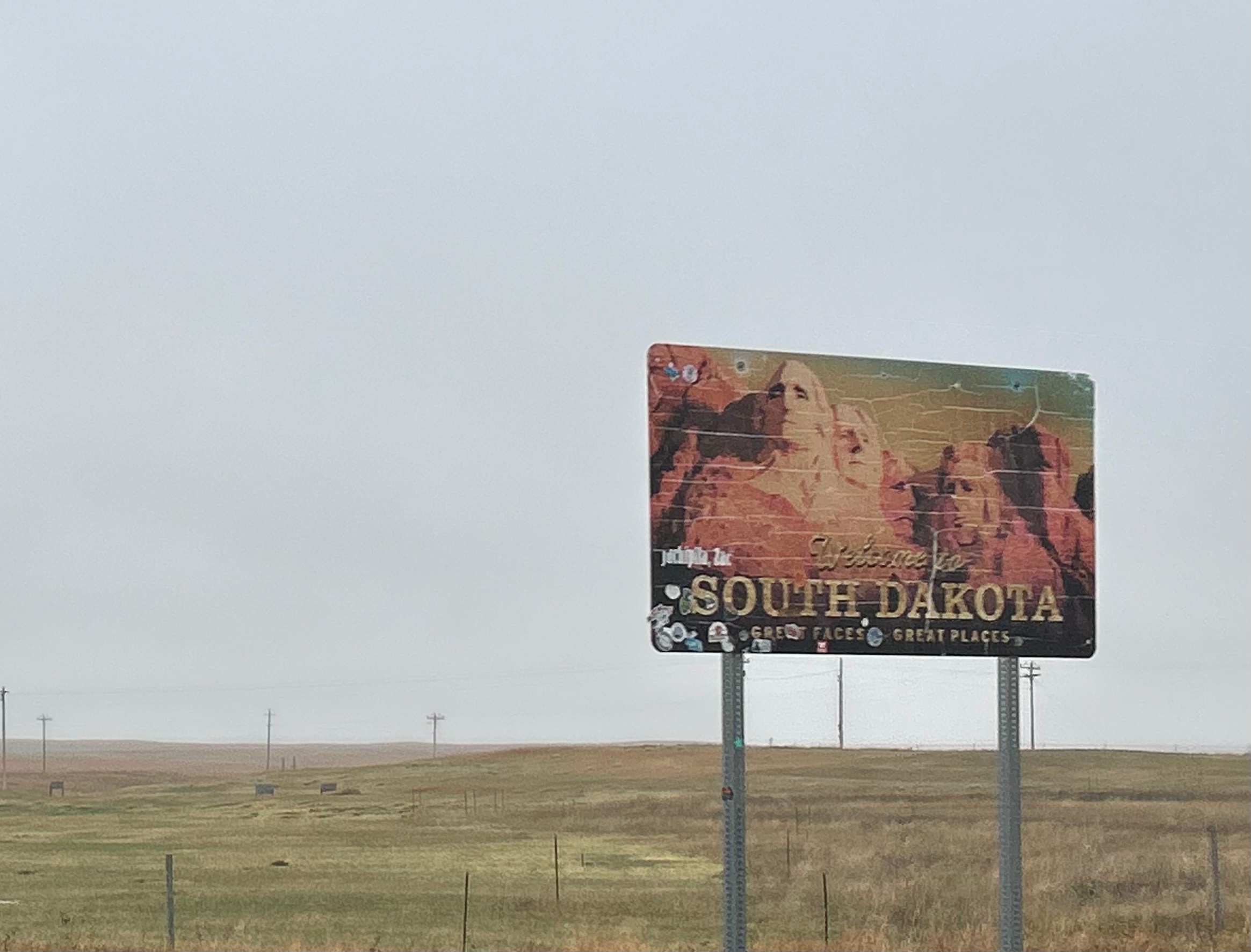
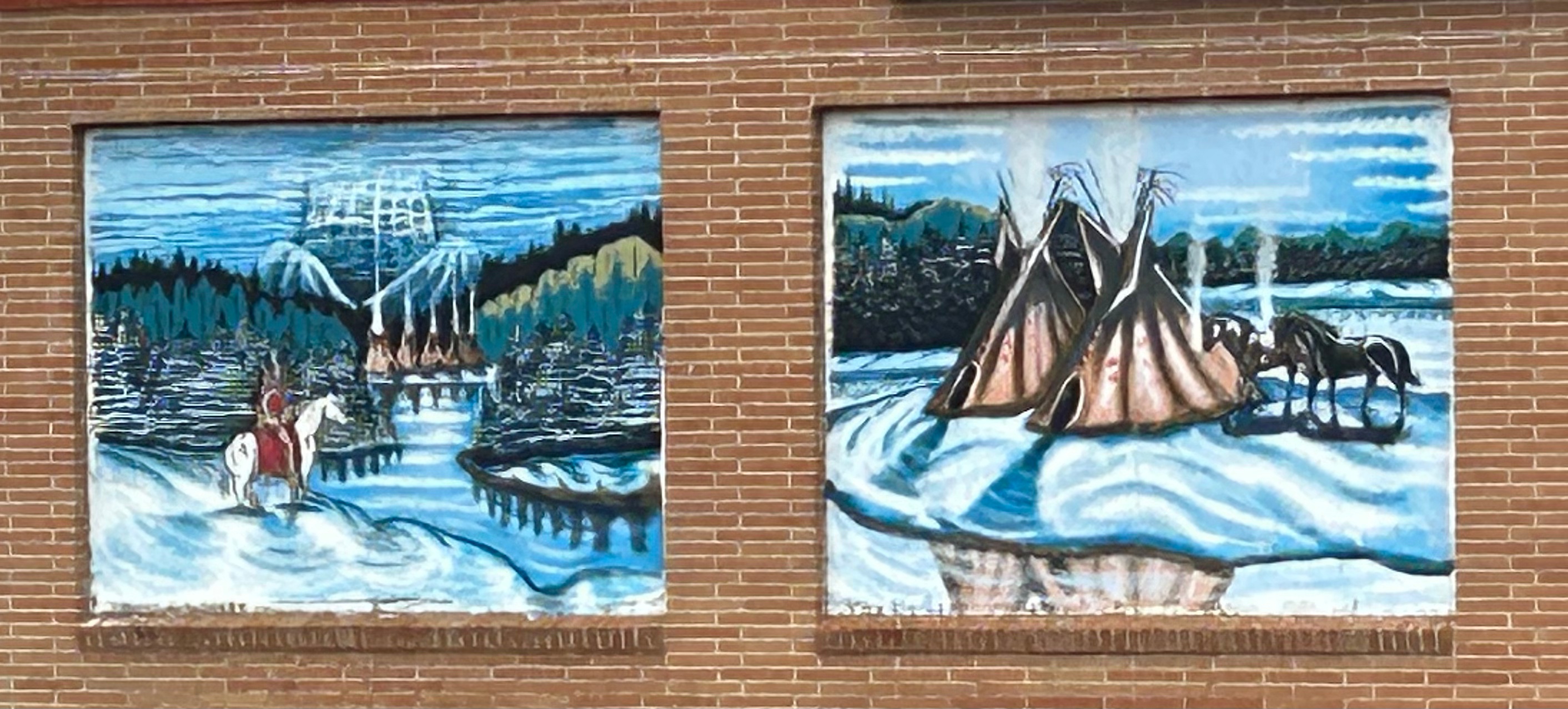
As we moved on from Nebraska to South Dakota, the landscape started including more shrubs and trees that were dark, almost dead looking. Turns out these were Black Hills Spruces and Ponderosa Pines. We drove through small towns and tribal lands, enjoying art on some of the local buildings.
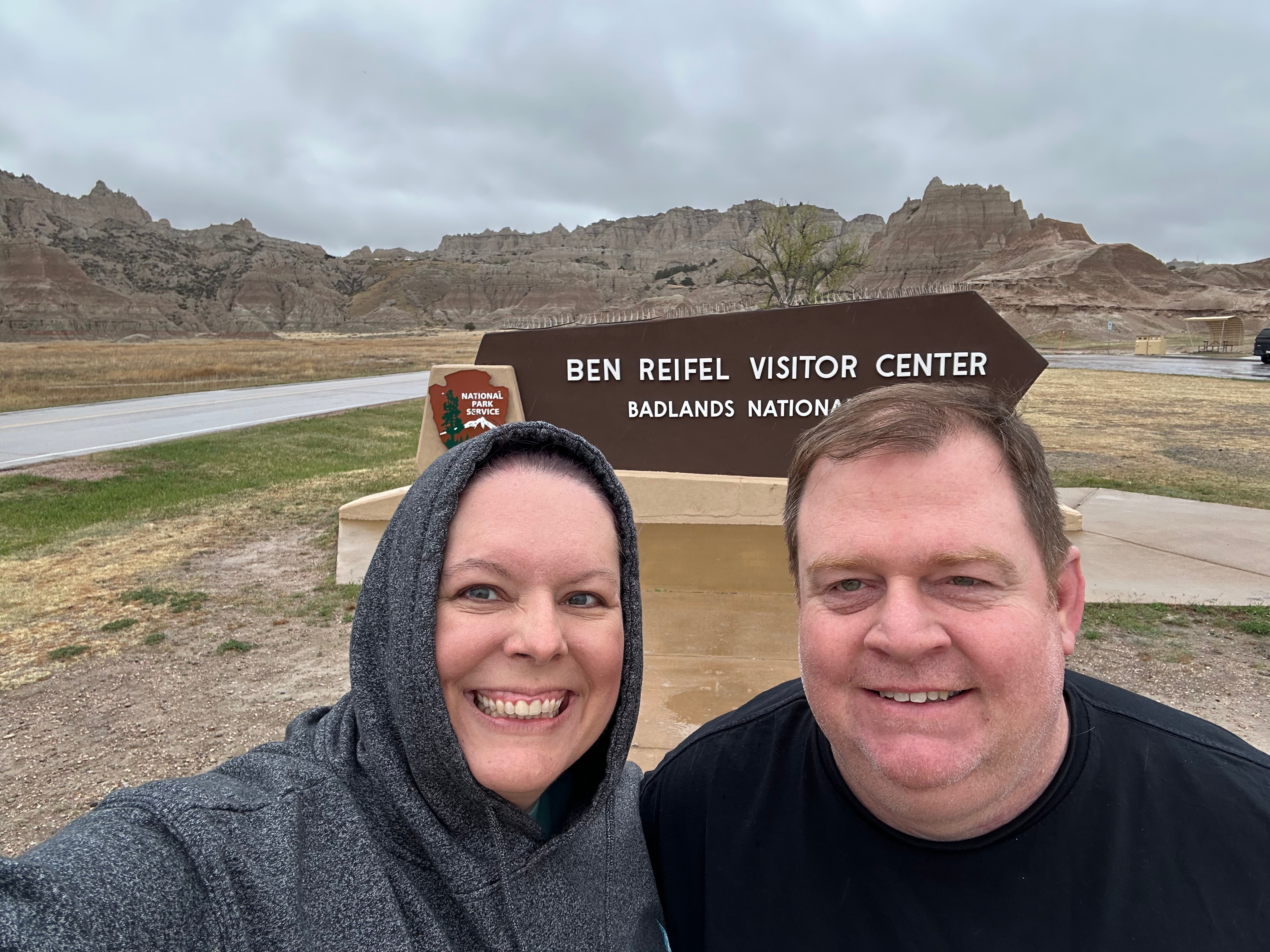
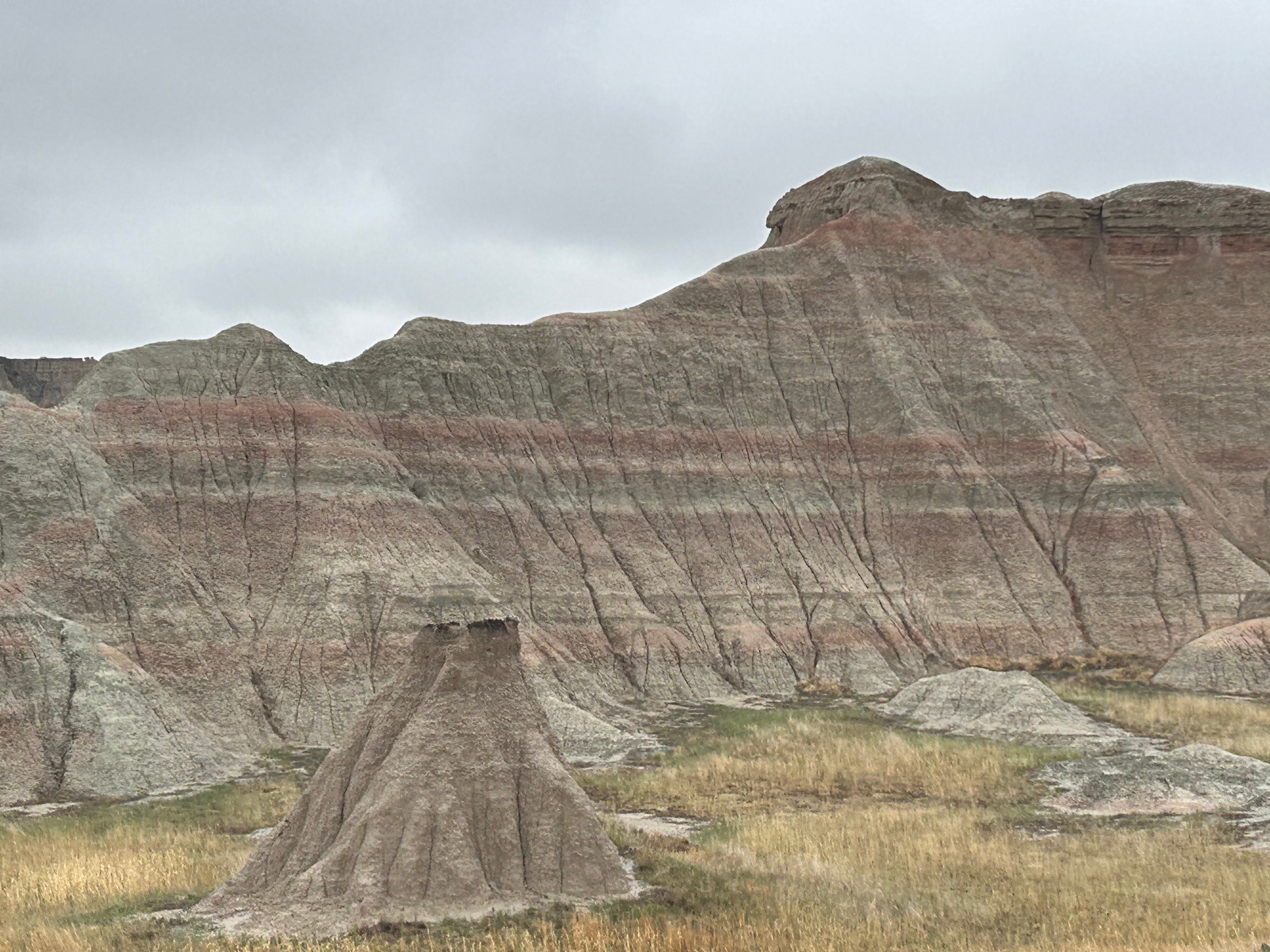
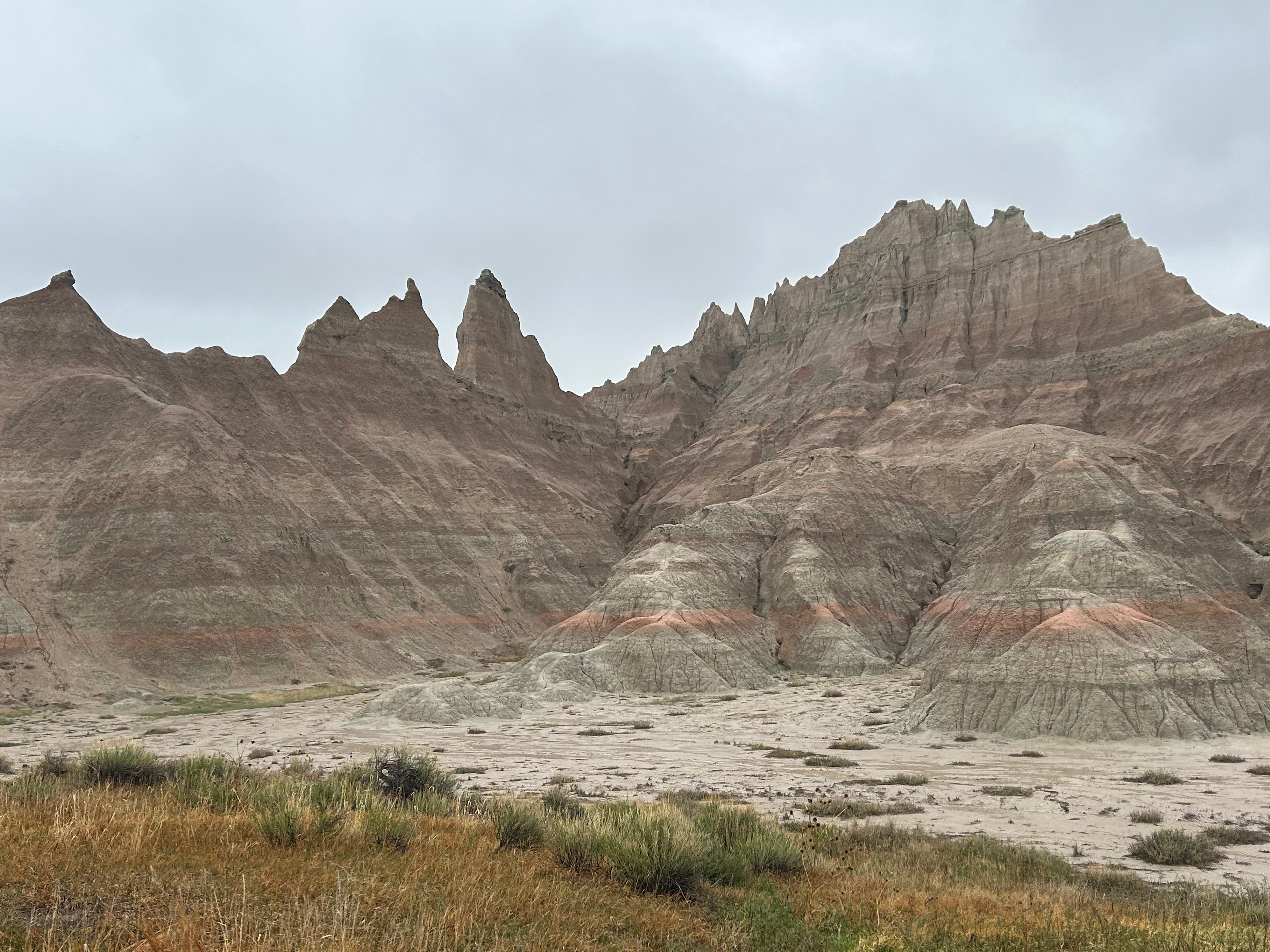
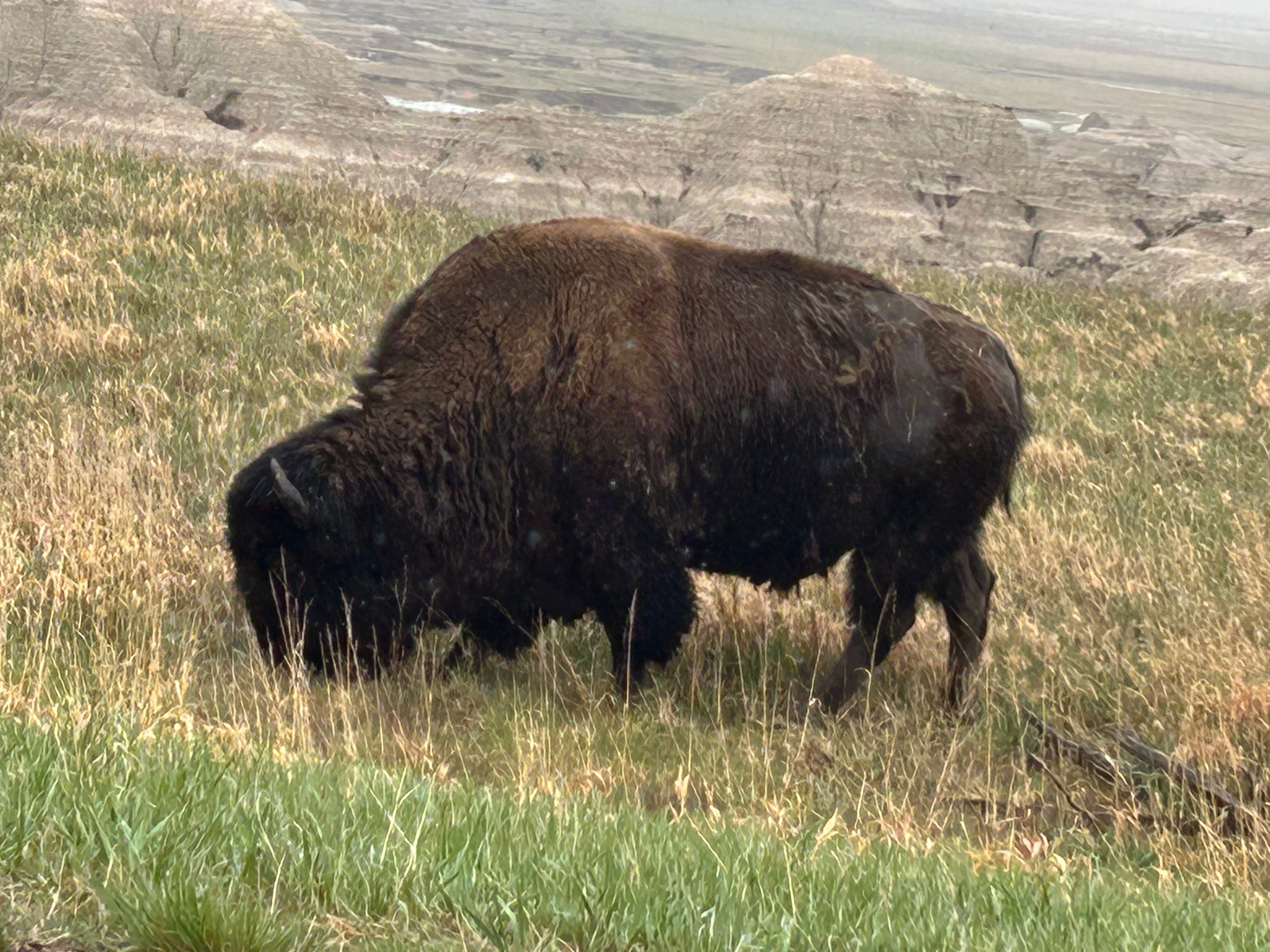
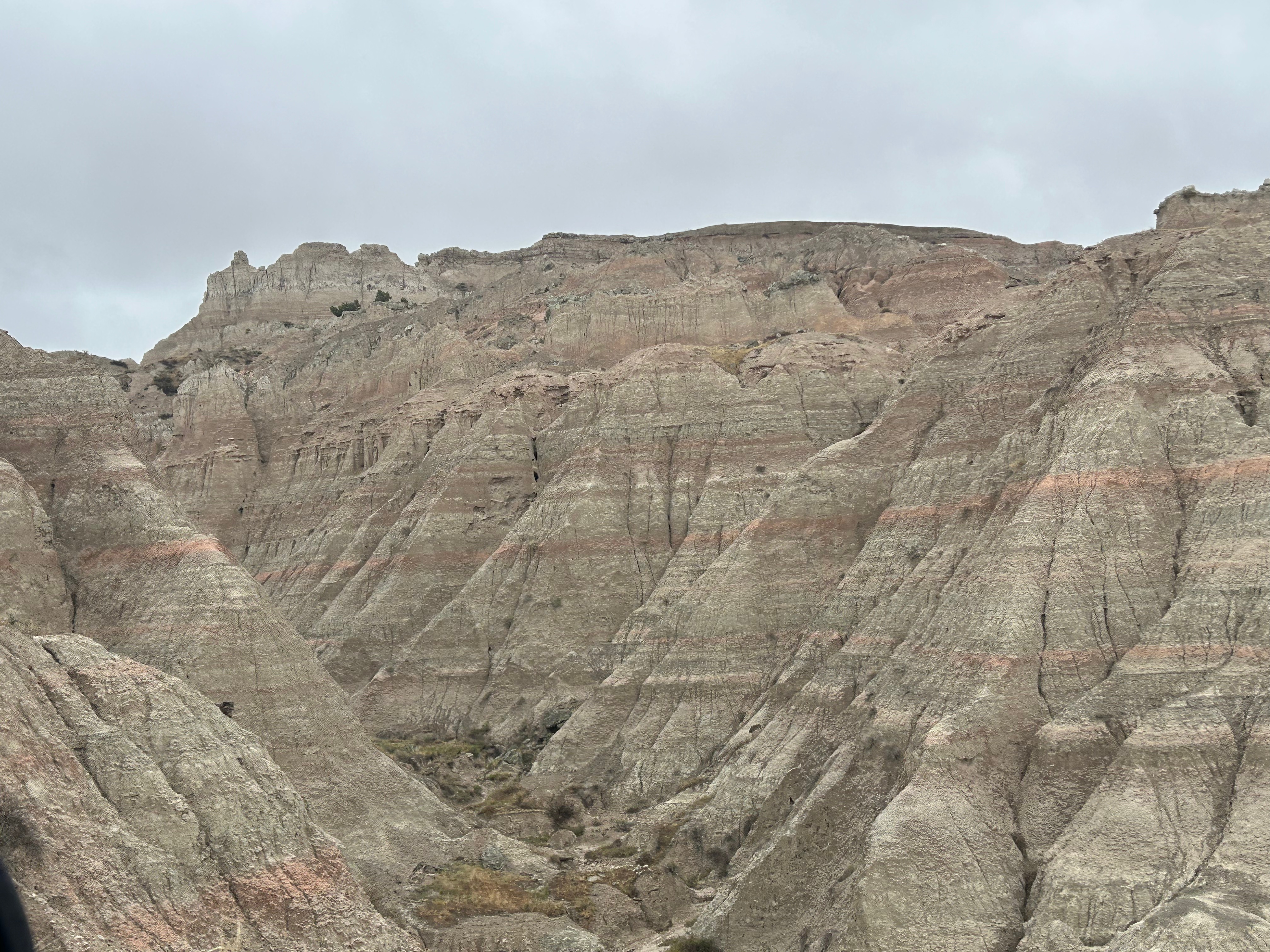
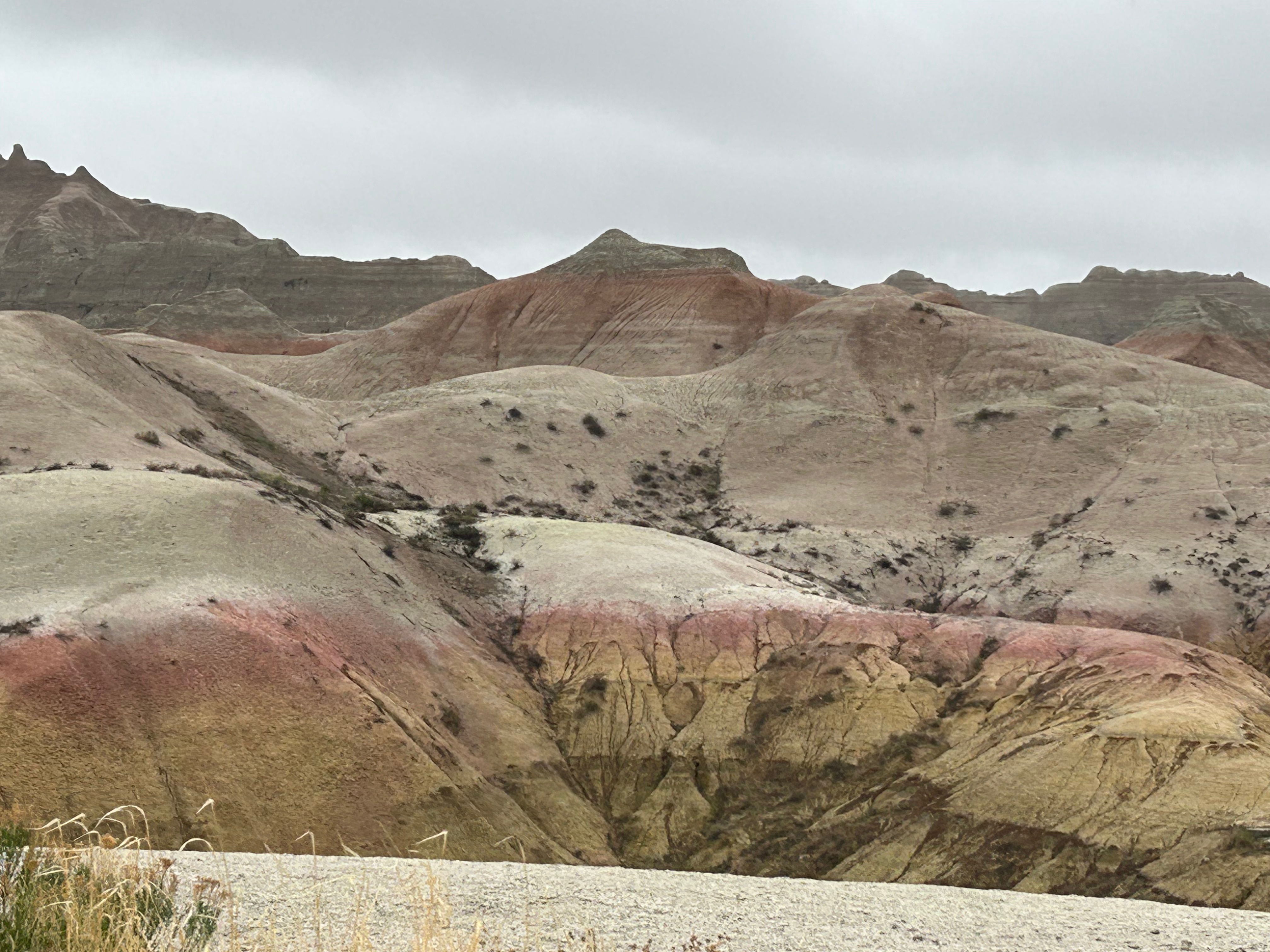
Then, somehow out of nowhere, the landscape changed, and we were in the Badlands. After the obligatory visitor center stop, we took the loop road through the park. It was cold and windy with low clouds, so we didn’t visit any of the overlooks. I’ll bet this place is even more stunning on a clear day where you can see across the vast vistas. It was still such an amazing place, with color and formation changes around every turn. The buttes, peaks, and gullies were all interspersed with the surrounding prairies. Even without the sun shining on the formations, you could see more colors than you could count. Despite the weather, we got to see some bison grazing along the roadside. We also saw the mounds where prairie dogs and black-footed ferrets live, but they seemed to be hiding from the weather.
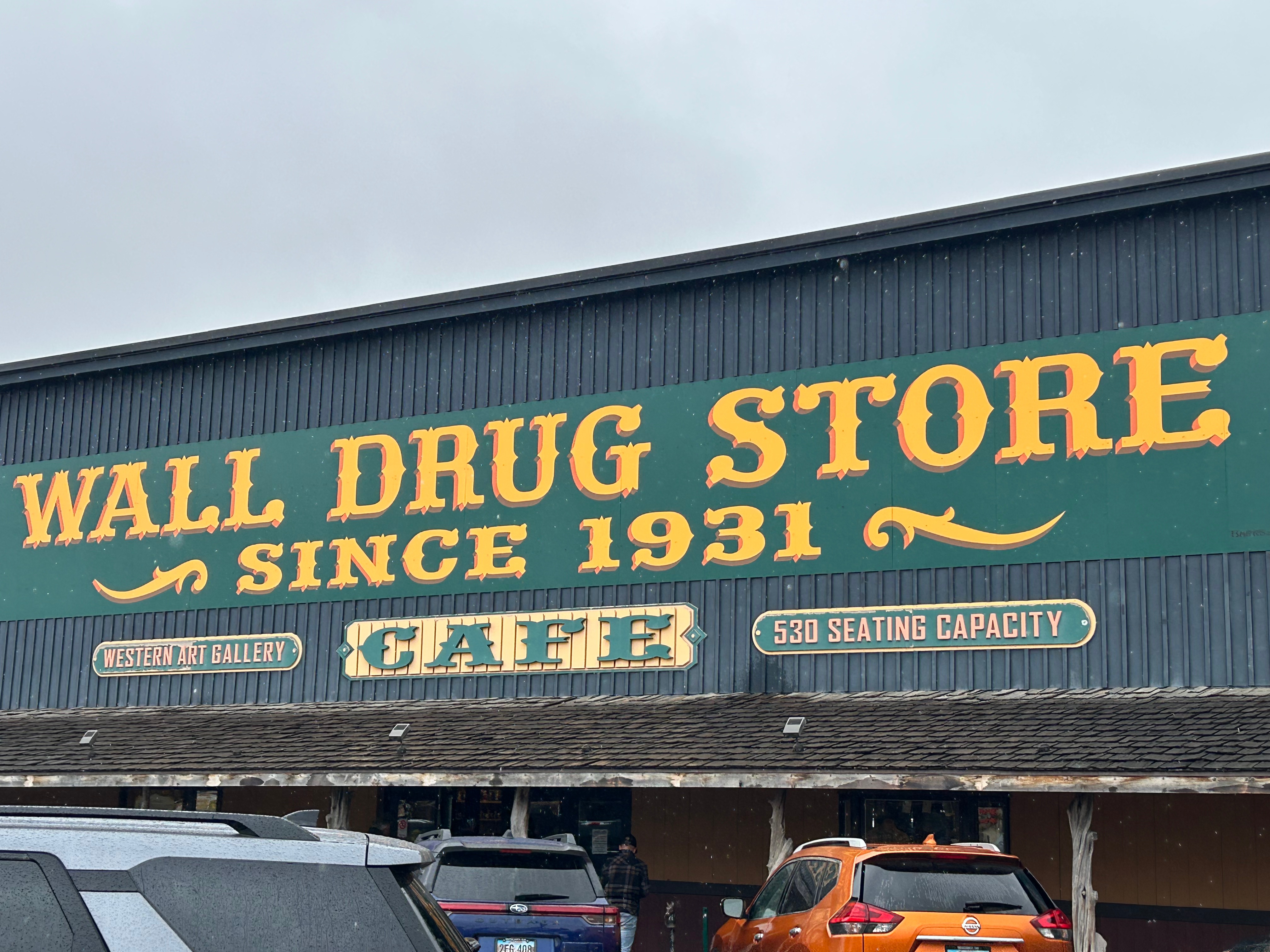
As we departed the Badlands, it just happened to be lunchtime, and we just happened to be near Wall Drug. So off we went to check out another tourist trap. The whole town of Wall leaned heavily on the draw of Wall Drug and the place was surrounded by every possible shop you could imagine. We didn’t pan for gold or go gem mining or even buy boots. We did have a delicious lunch and amazing cherry pie. Of course, I also had to enjoy some free ice water. If you know, you know. ;)
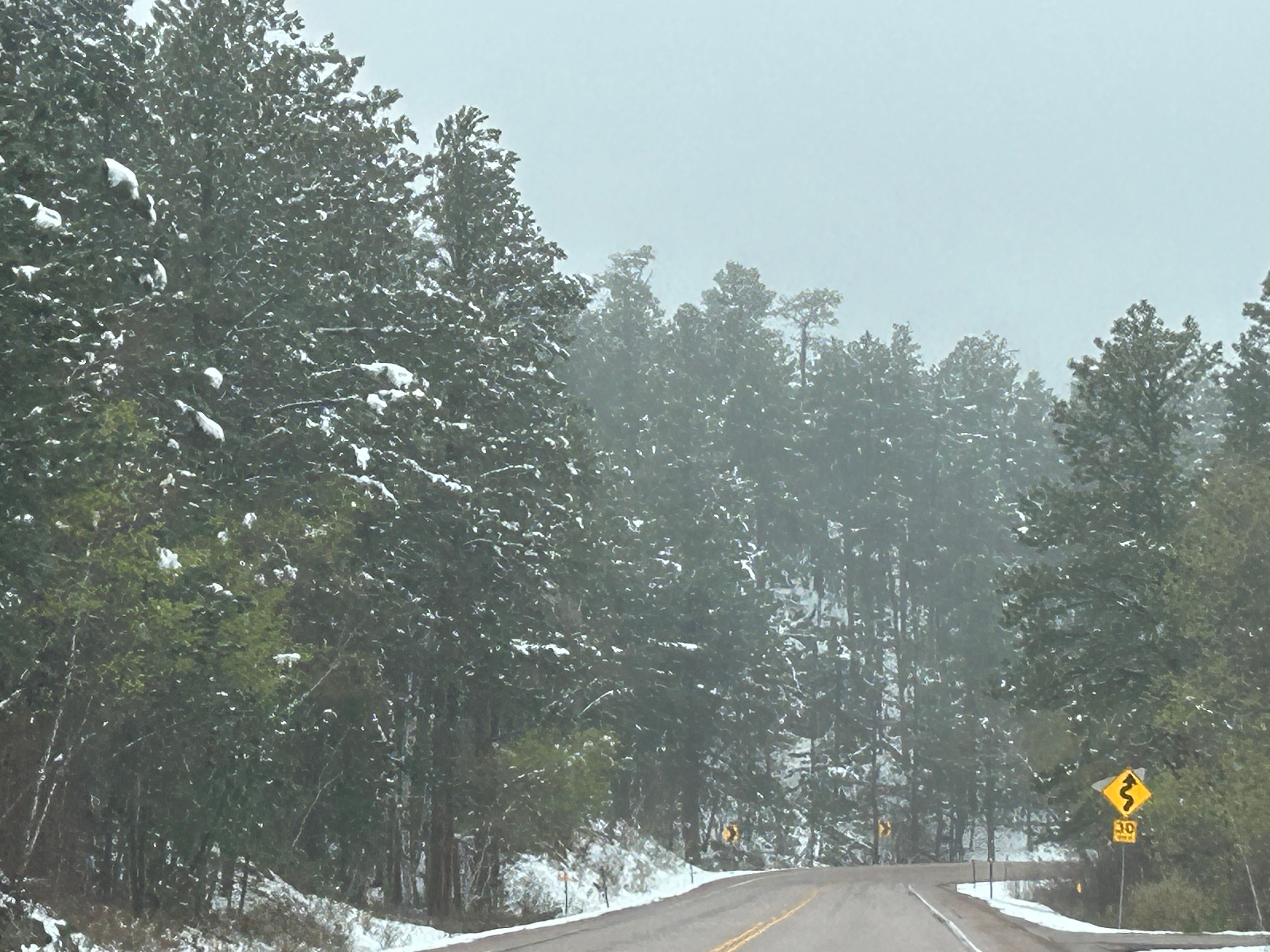
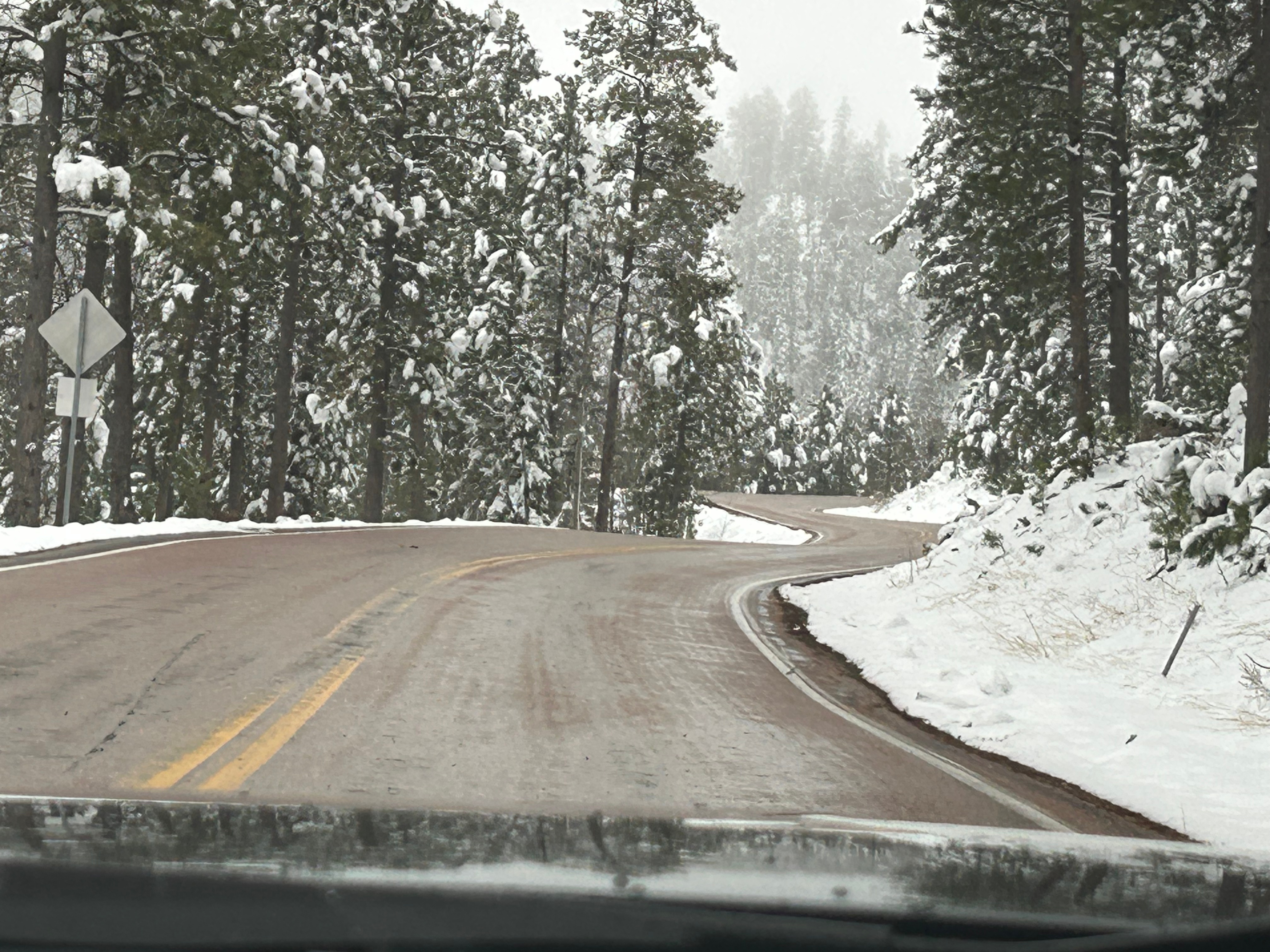
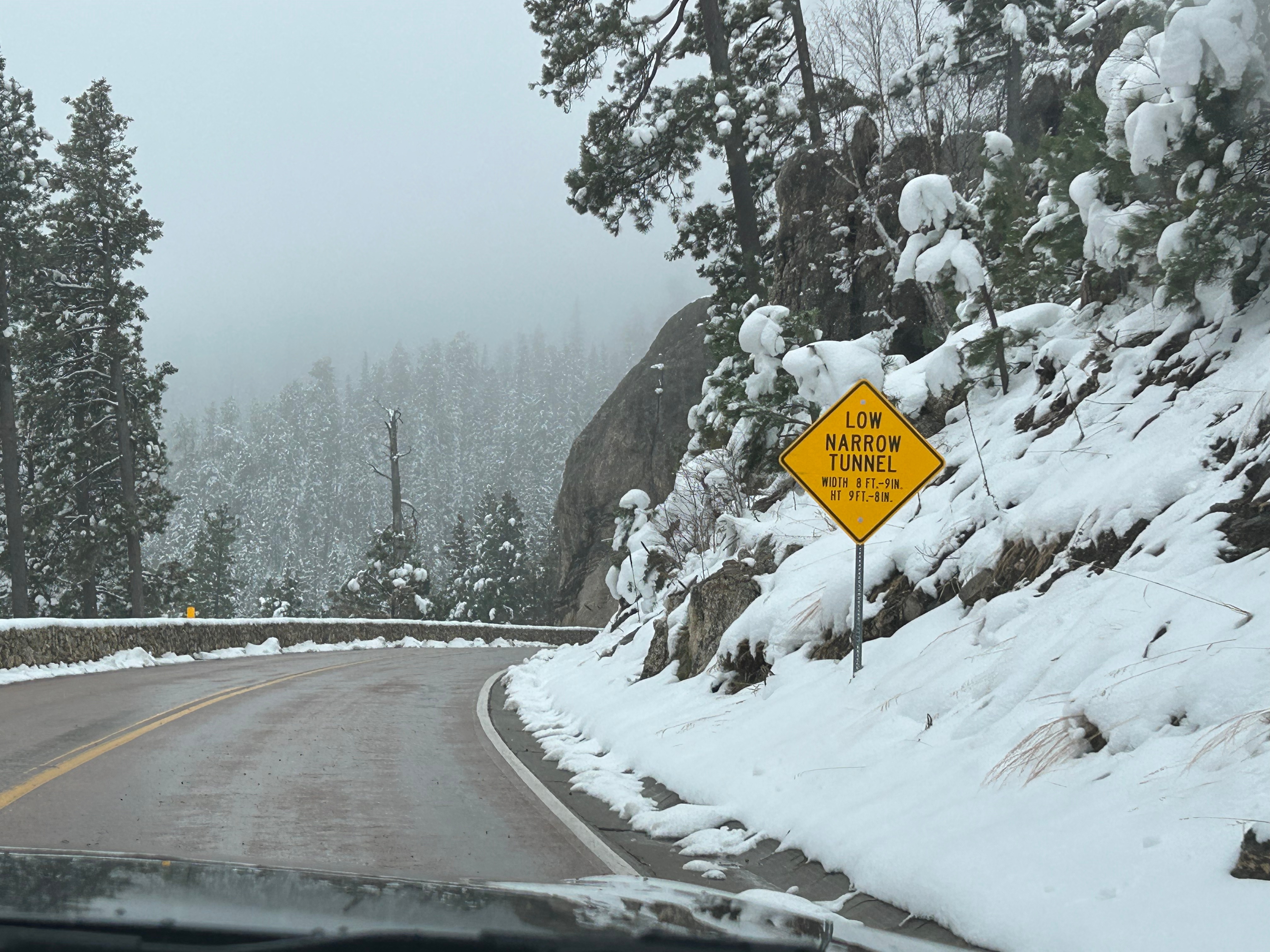
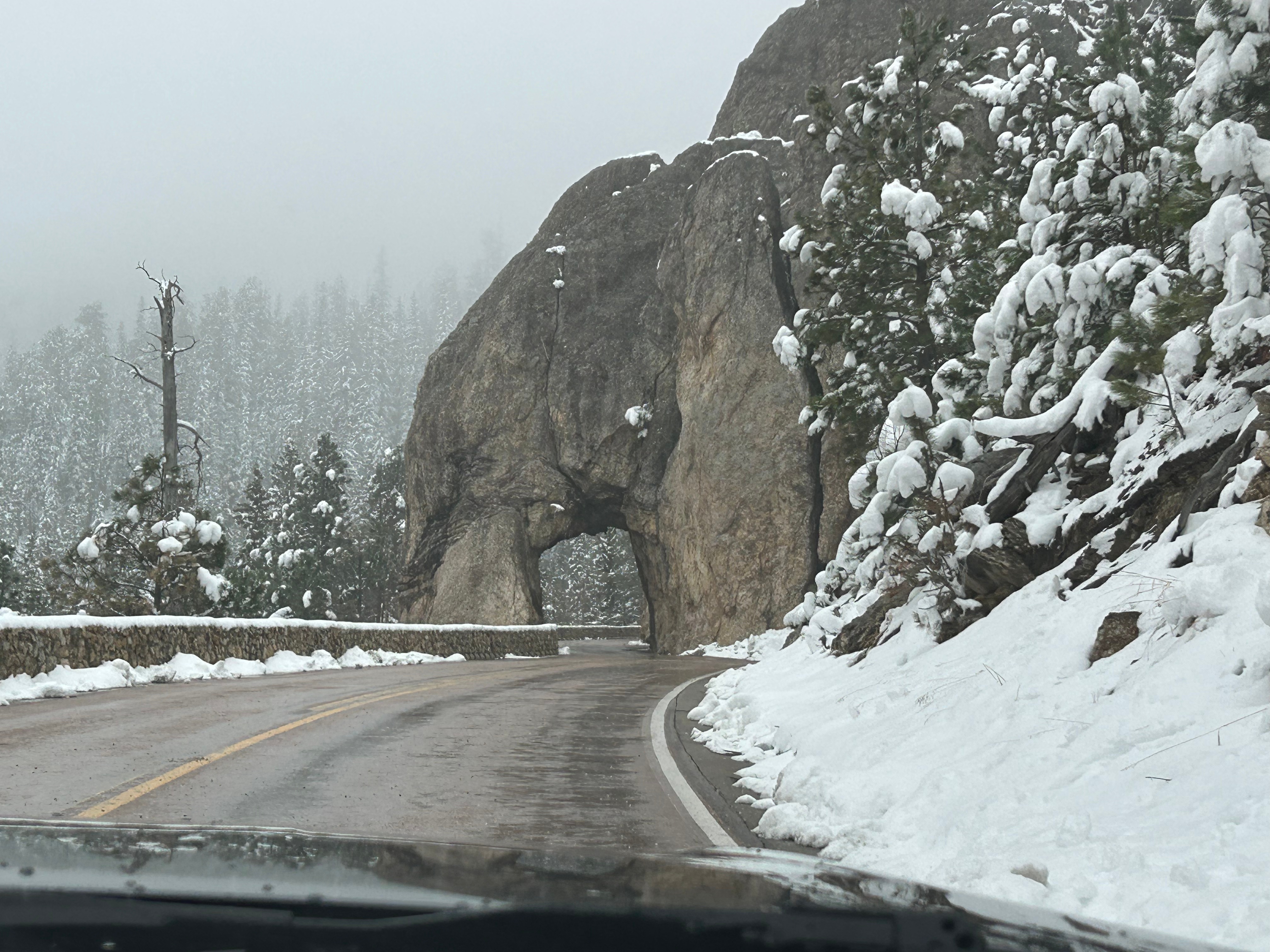
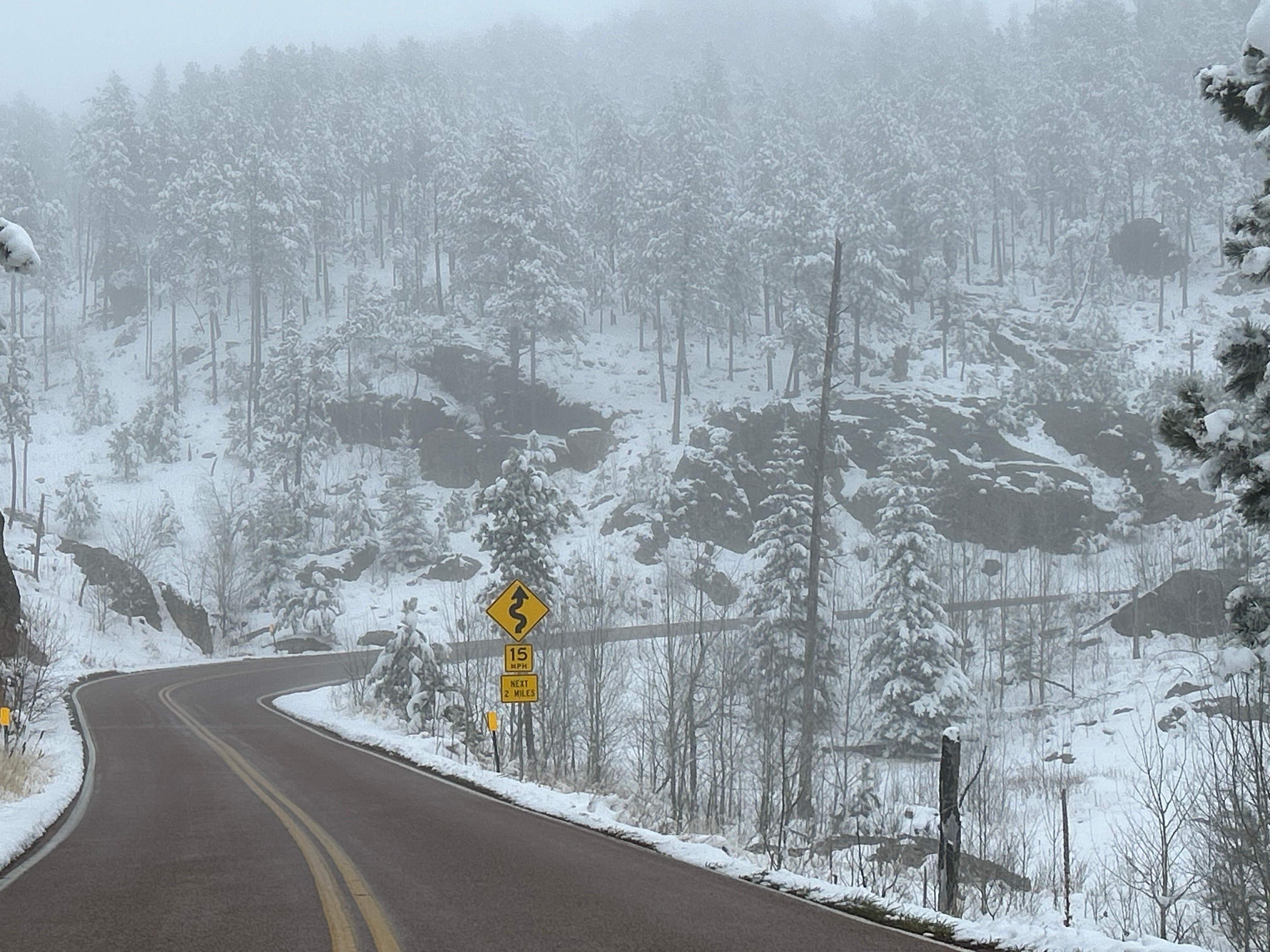
It looked like we had burned just enough time to venture towards the Black Hills National Forest after the morning’s snow. The Iron Mountain Road in the Black Hills is what brought us to South Dakota to begin with. Thom was eager to drive this road, and I was eager to see the views. We’d watched some YouTube videos of others driving this road, and the tunnels seemed cool–especially the one where you can see Mount Rushmore through the tunnel. The roads were still wet from the morning snow but, as with every road we’d encountered, it seemed like all roads were treated well and frequently. So off we (cautiously went).
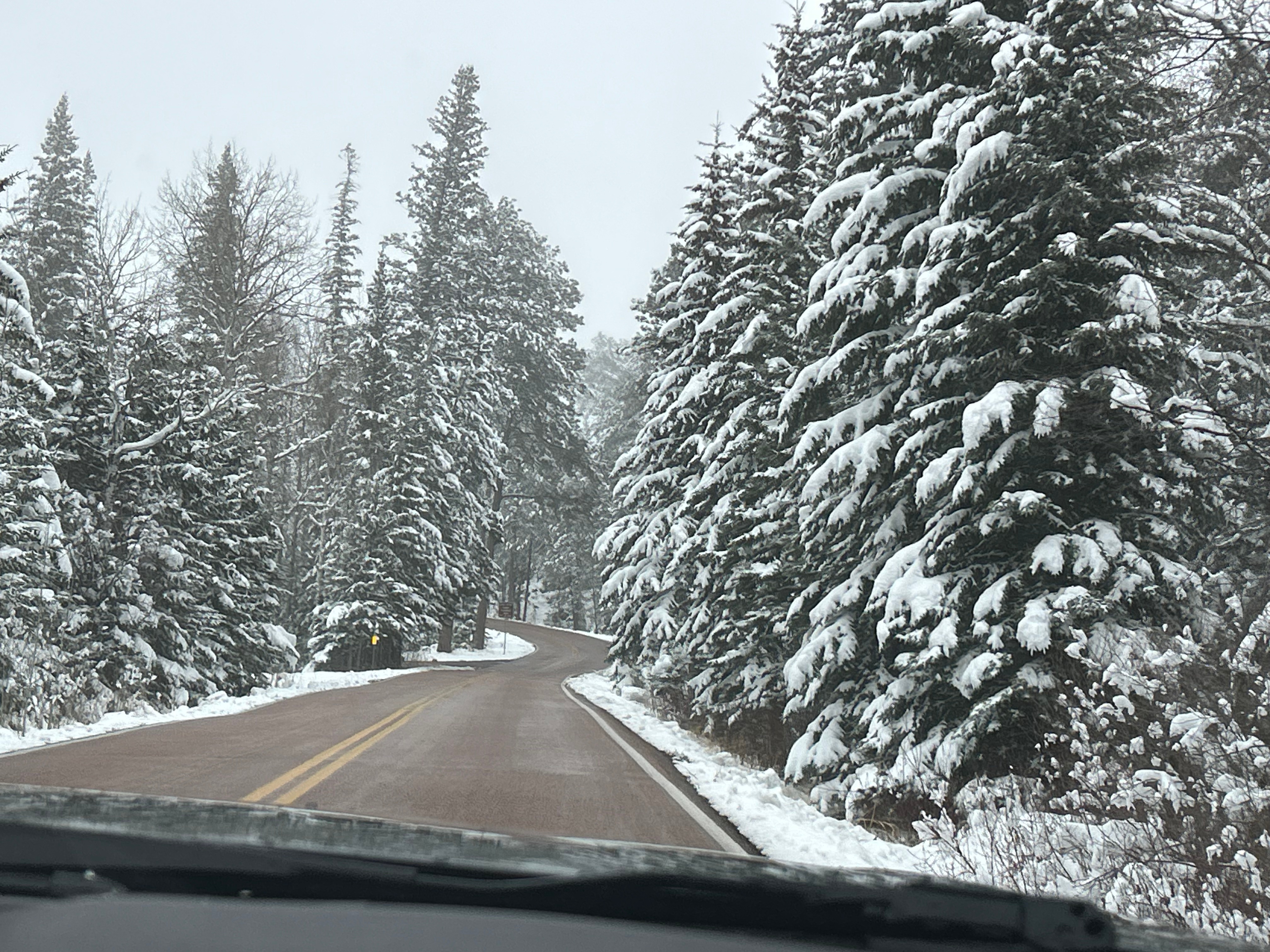
The Iron Mountain Road is a 17-mile stretch featuring 314 curves, 14 switchbacks, 3 pigtails, and 3 tunnels. Oh, and there are countless animals…some of which could be standing in the road when you round a corner. We saw so many animals, many of which we captured pictures of: bison, deer, turkeys, vultures, and antelope. Sadly, we didn’t see any of the big horn sheep. And if all of this wasn’t challenge enough, we were making an elevation gain of about 1000 feet…putting us squarely into areas of deep snow and dropping temperatures. Thom took it really easy and we just enjoyed the ride.
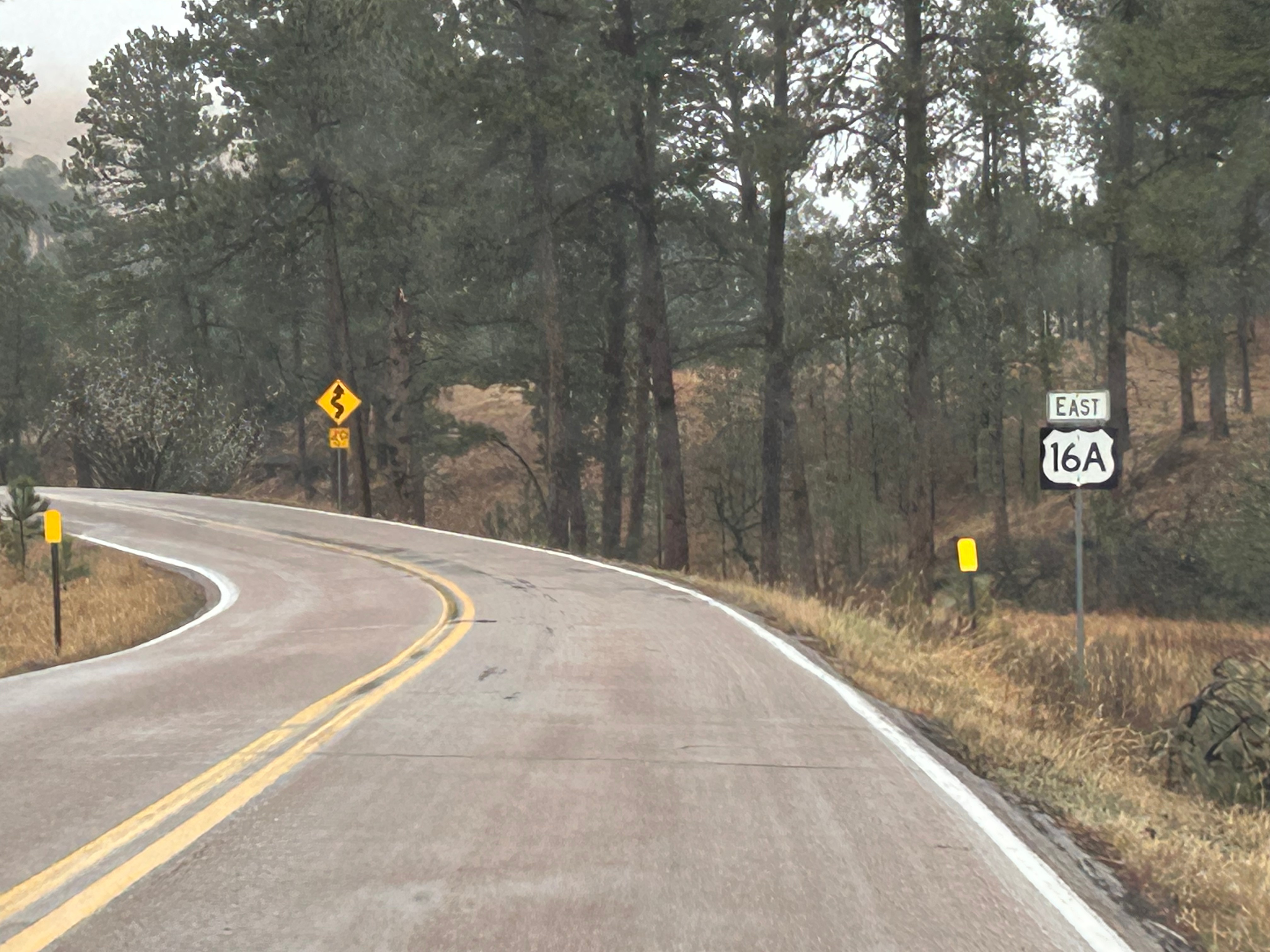
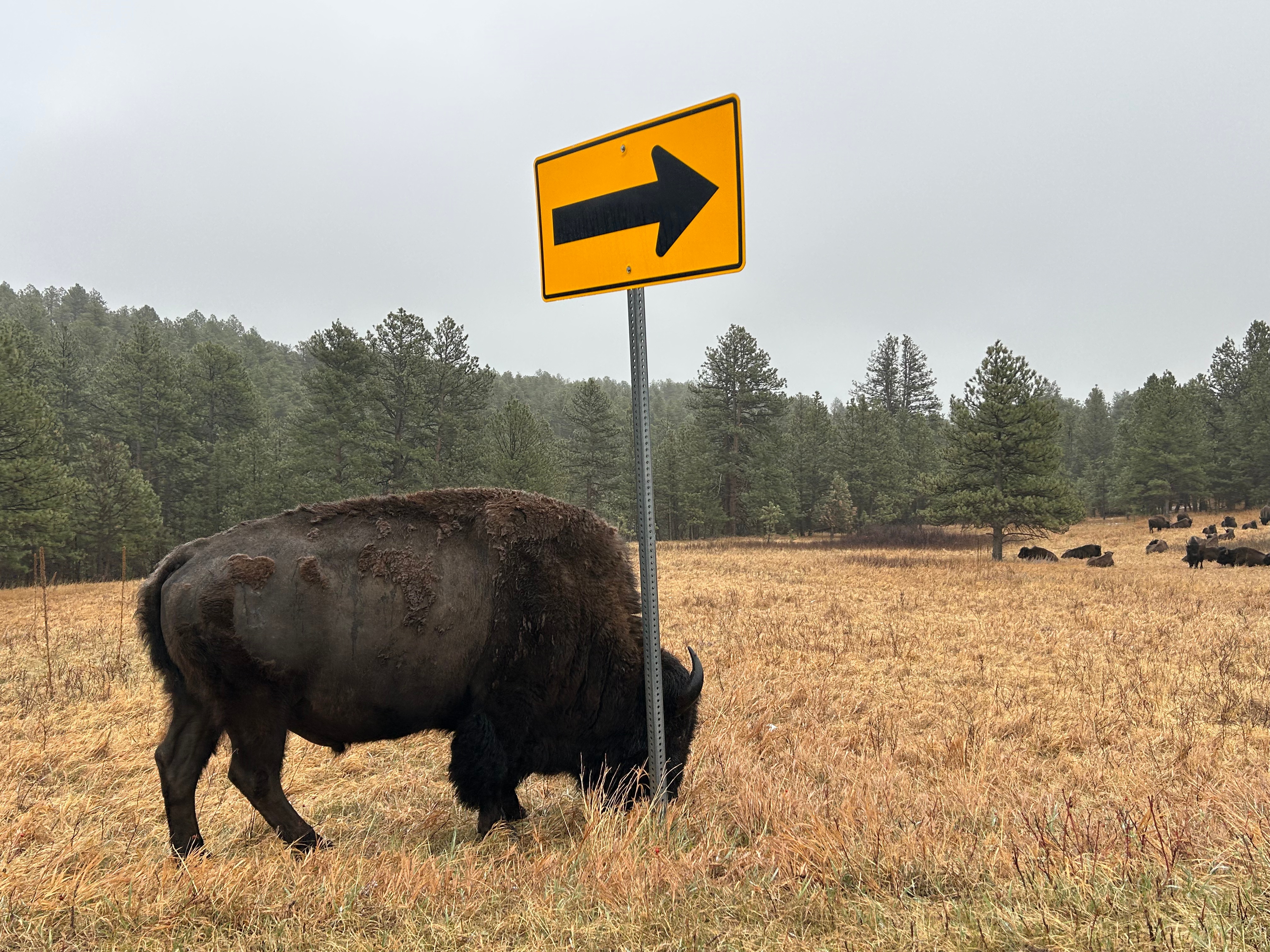
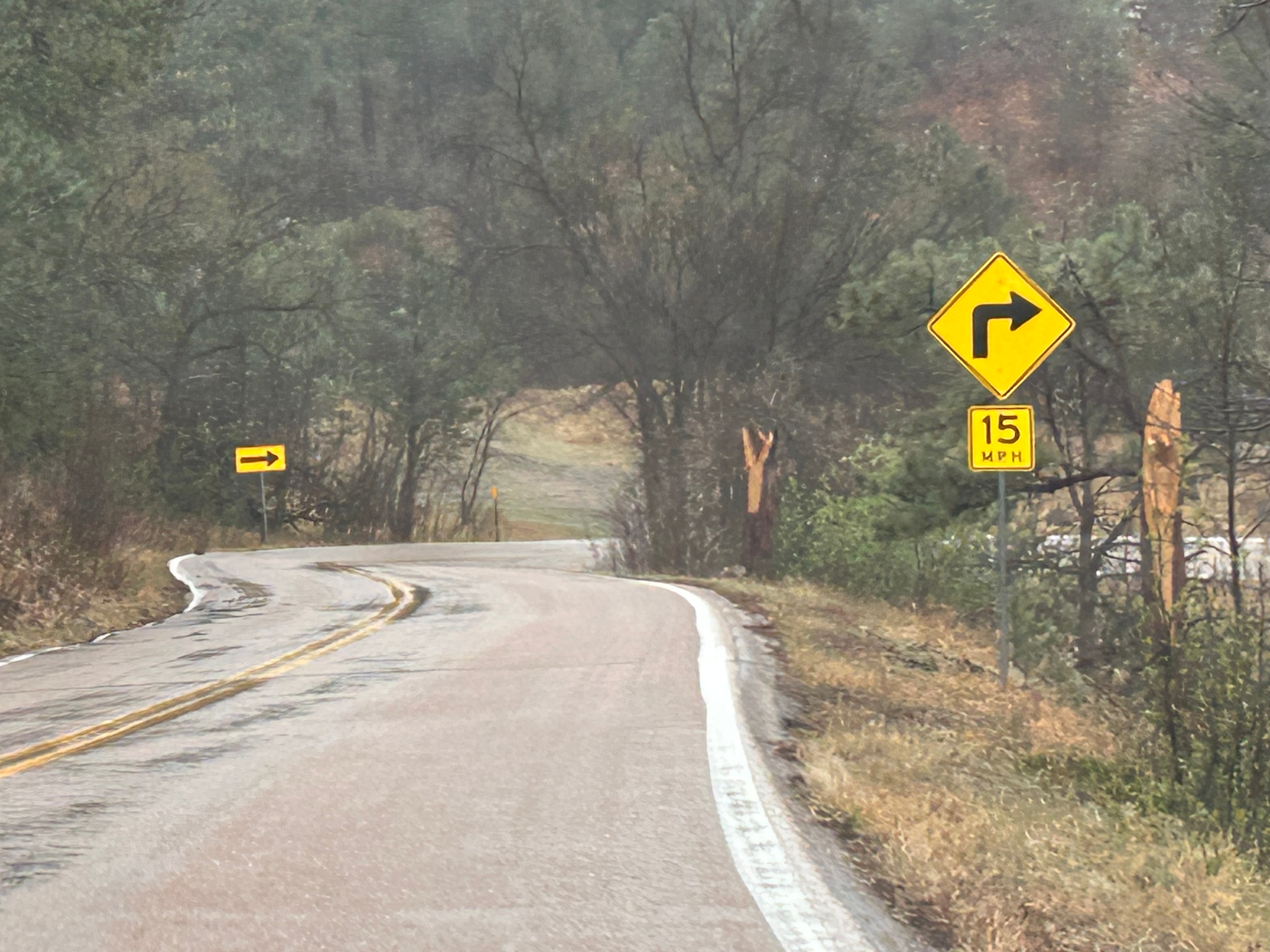
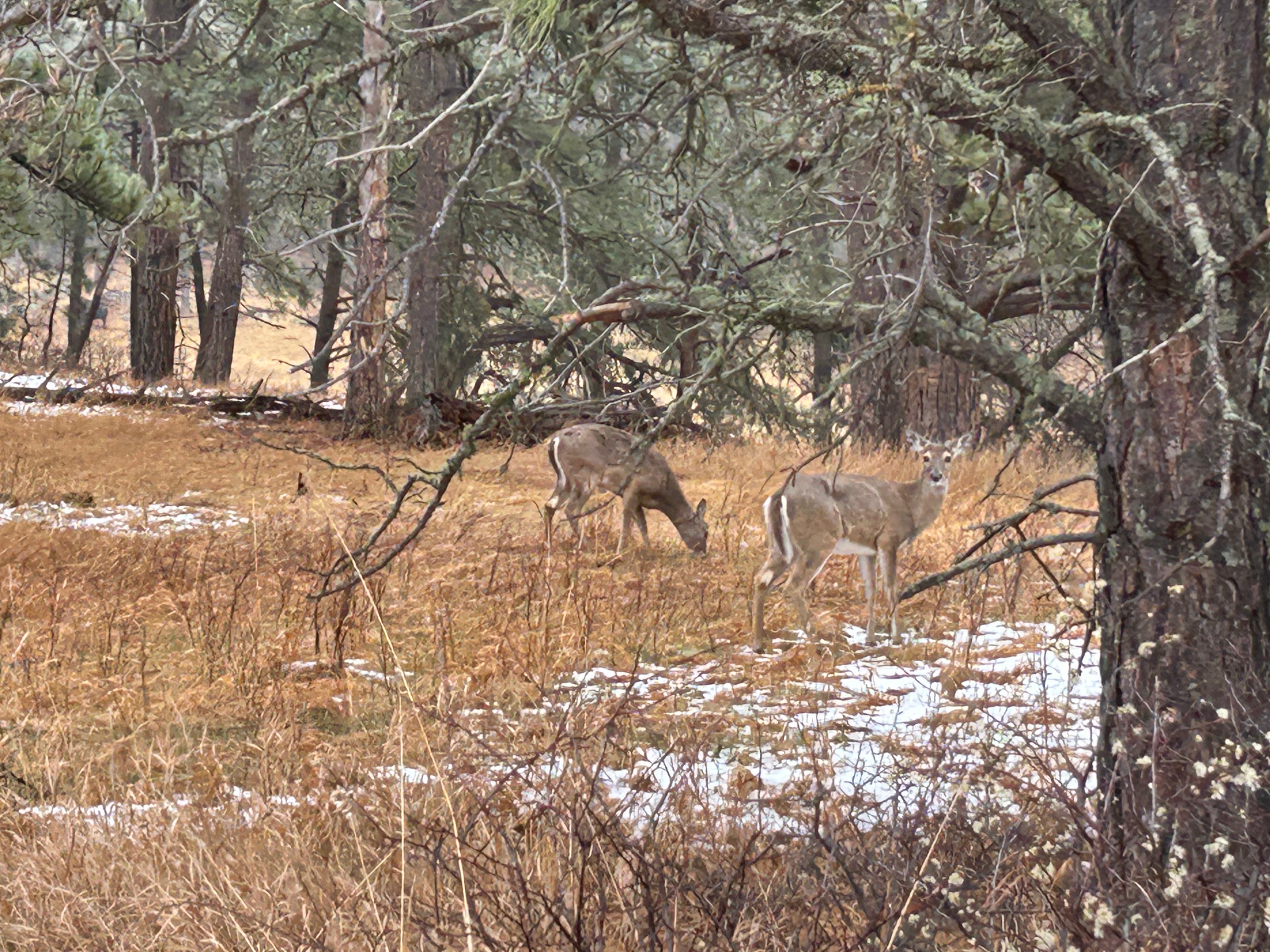
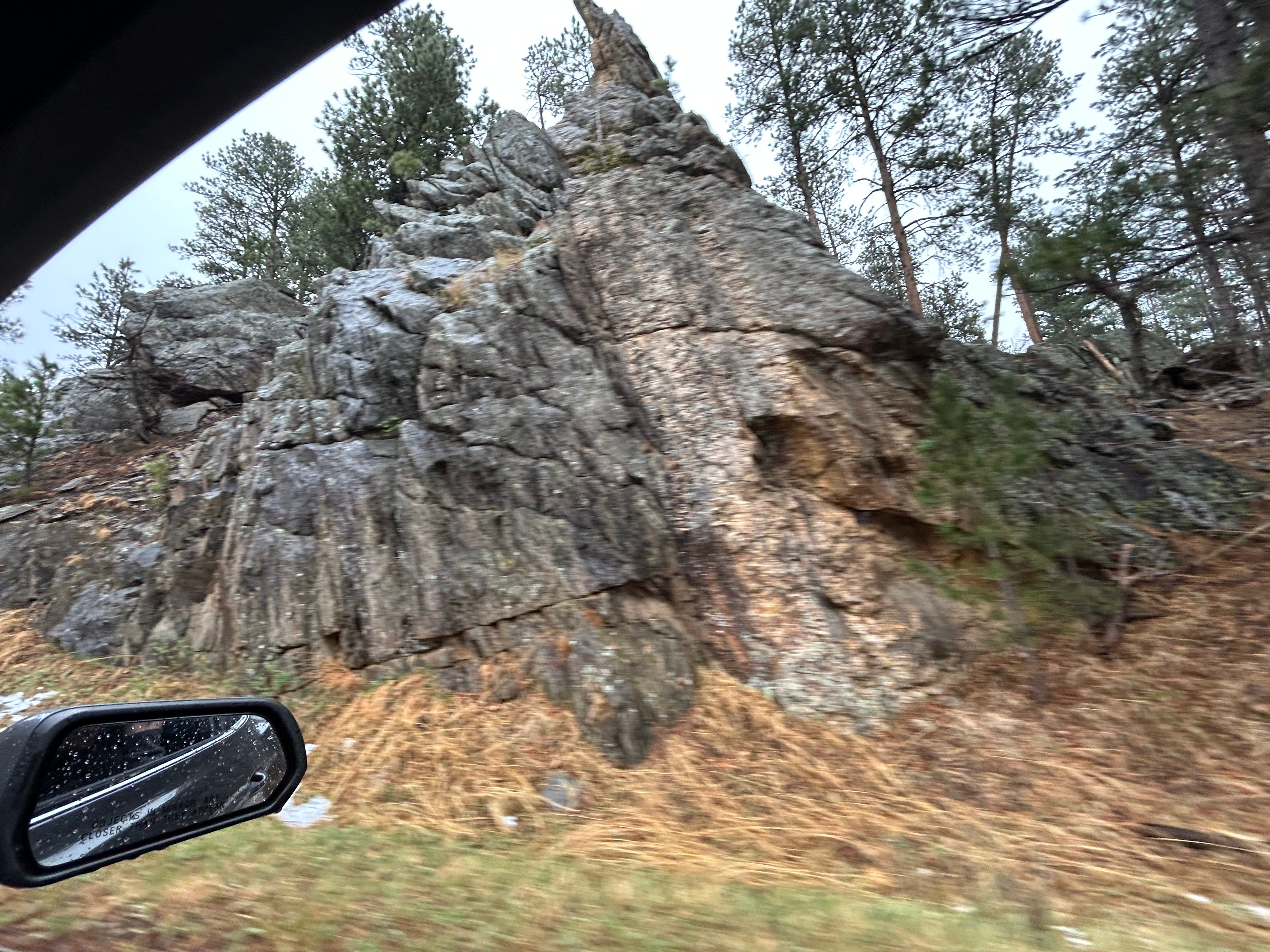
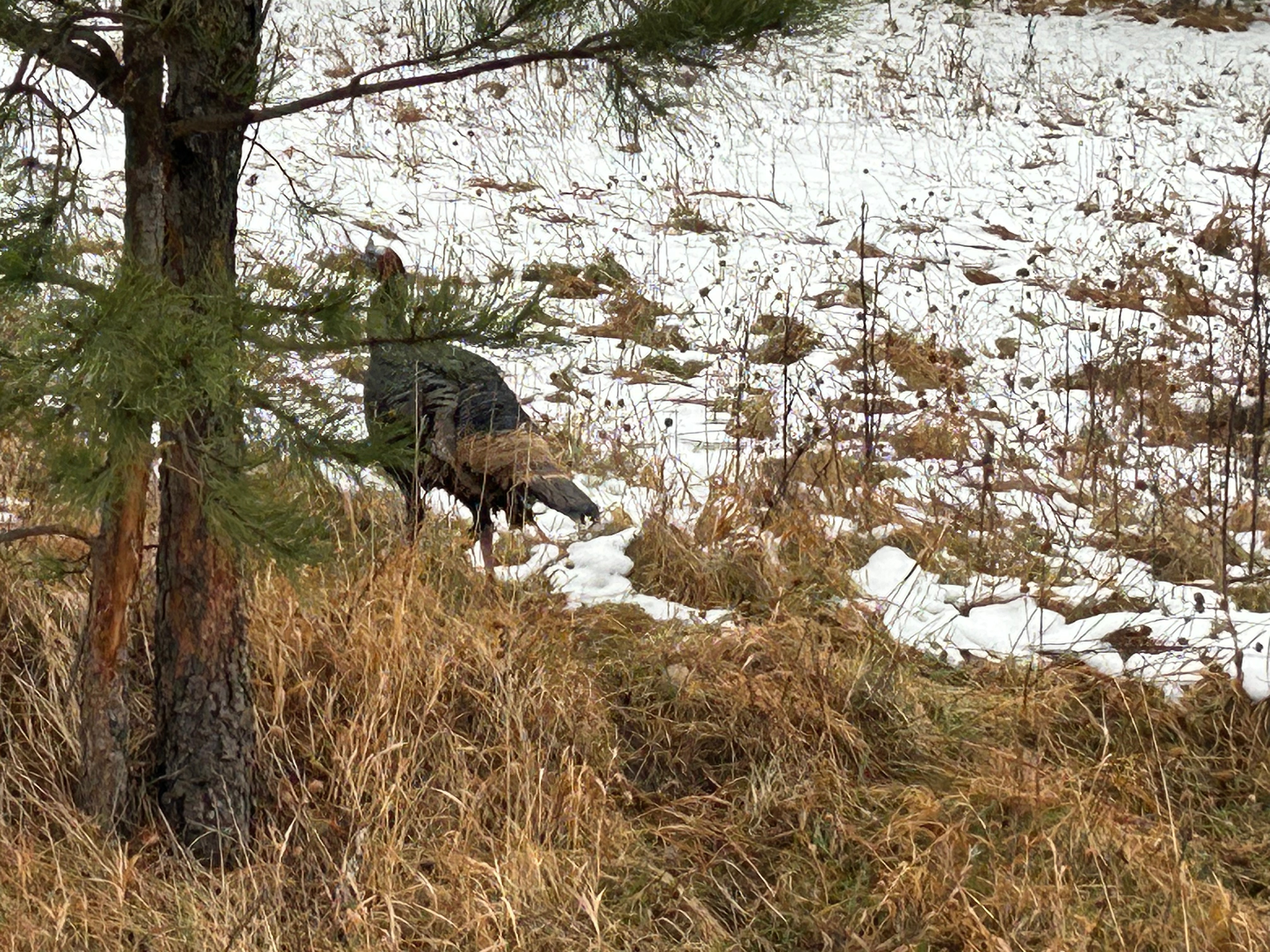
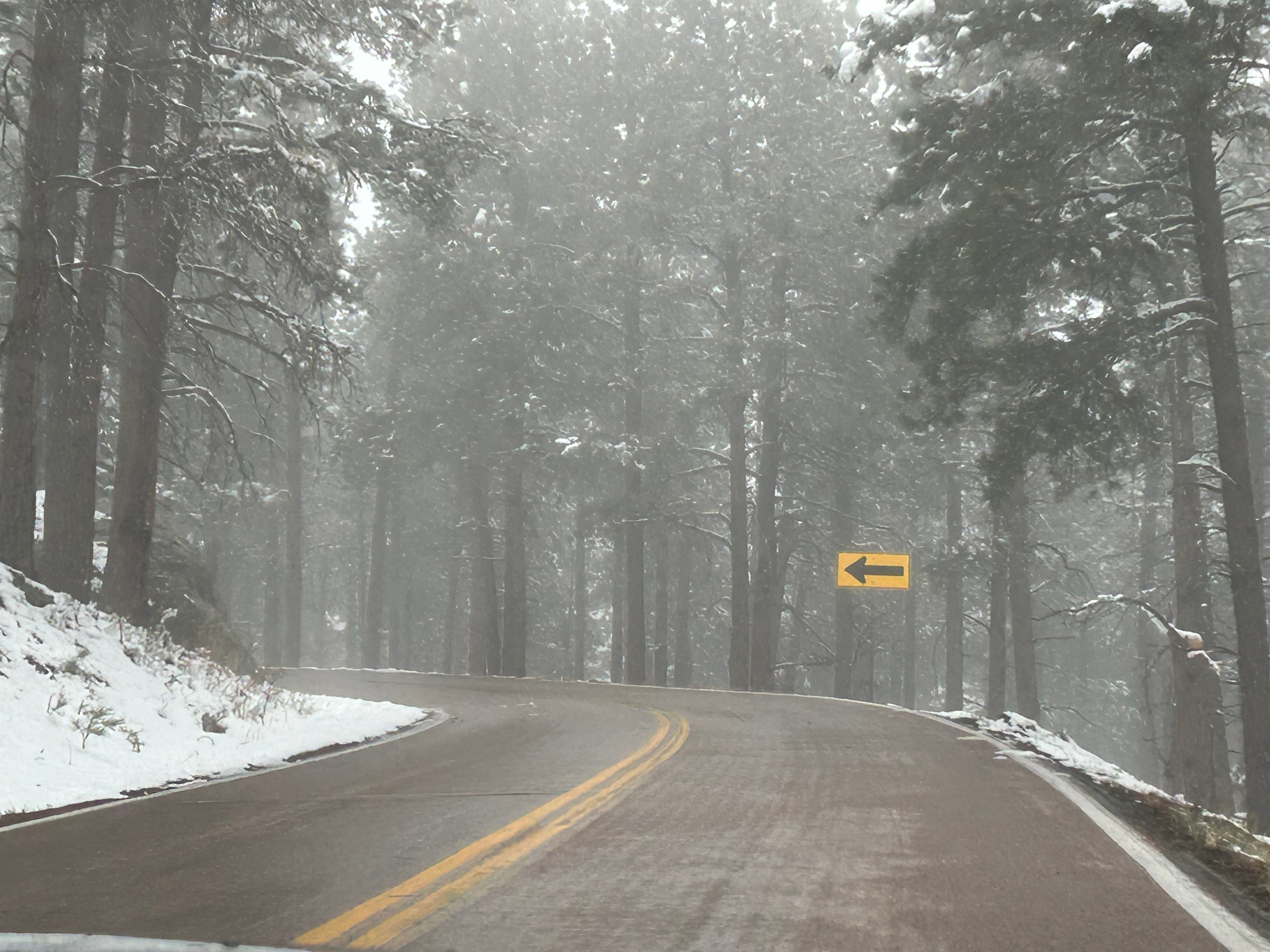
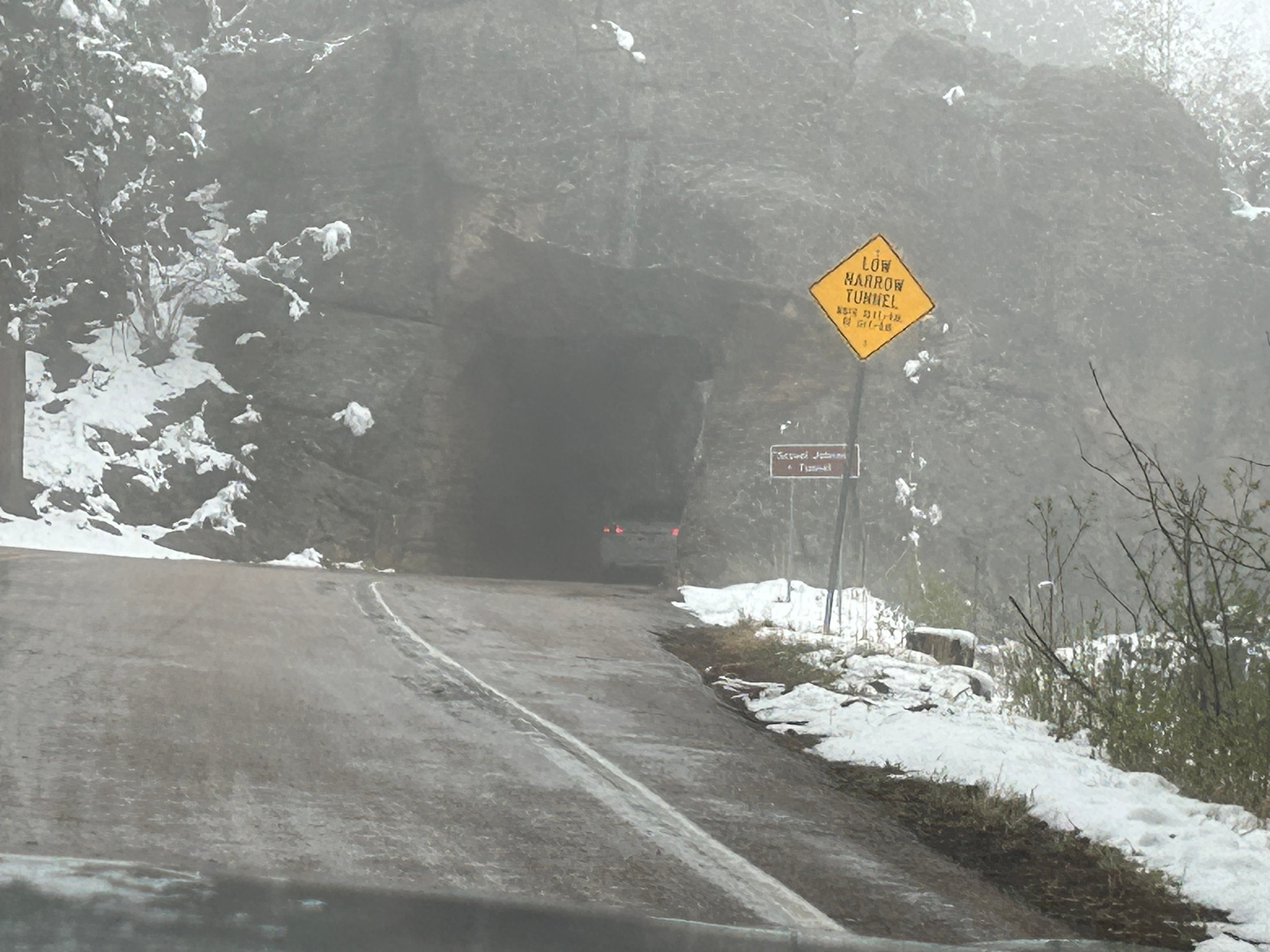
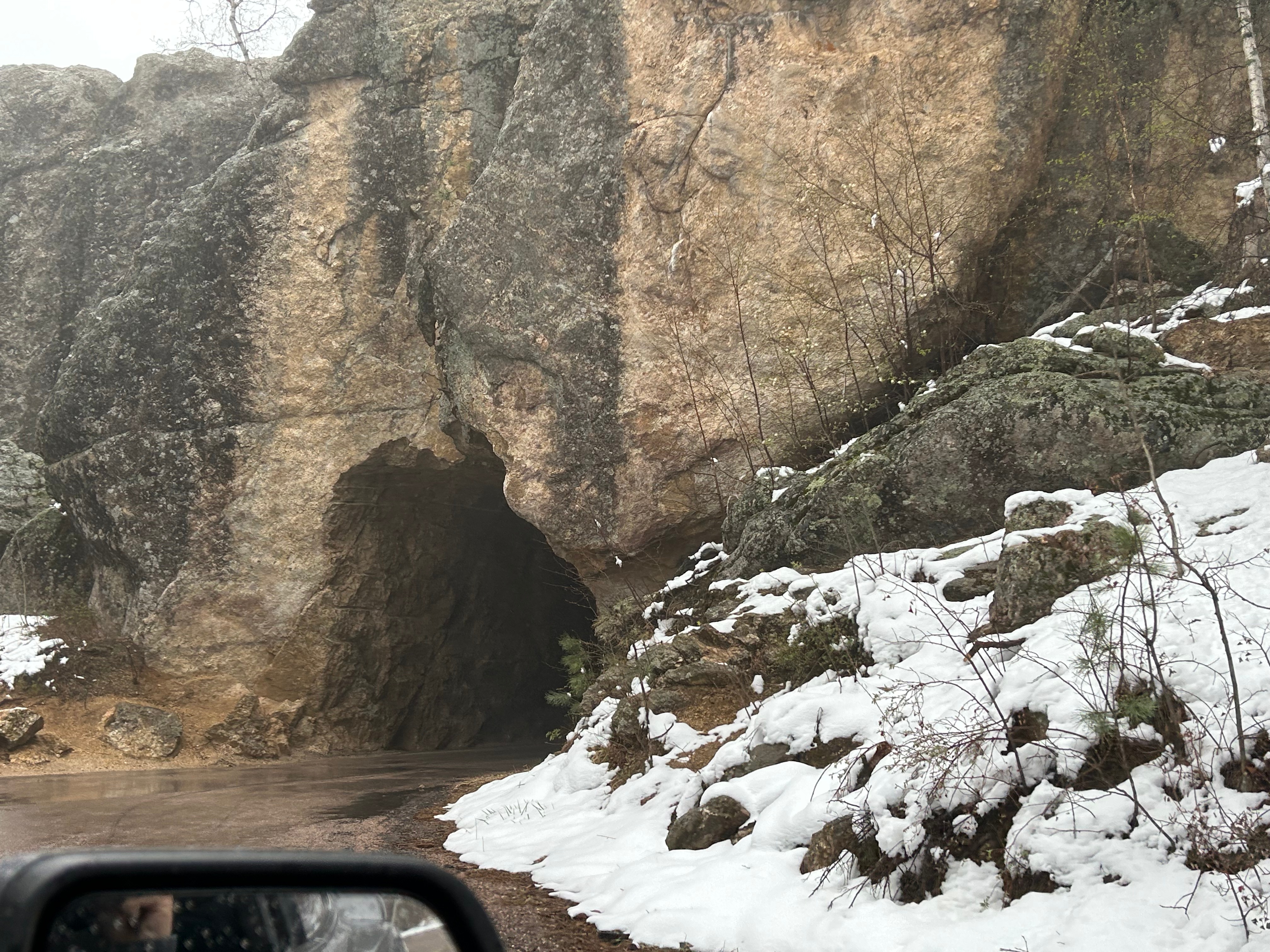
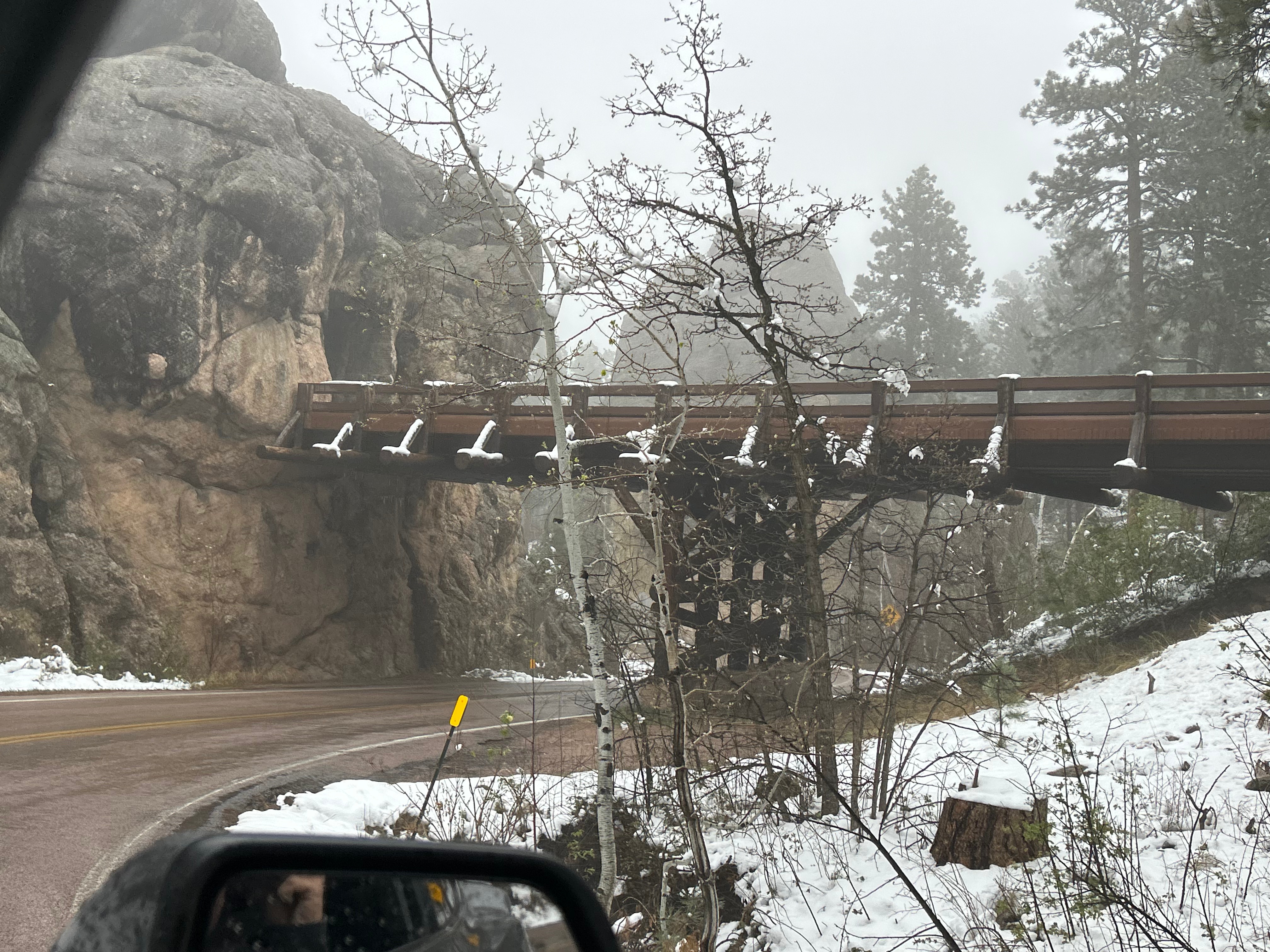
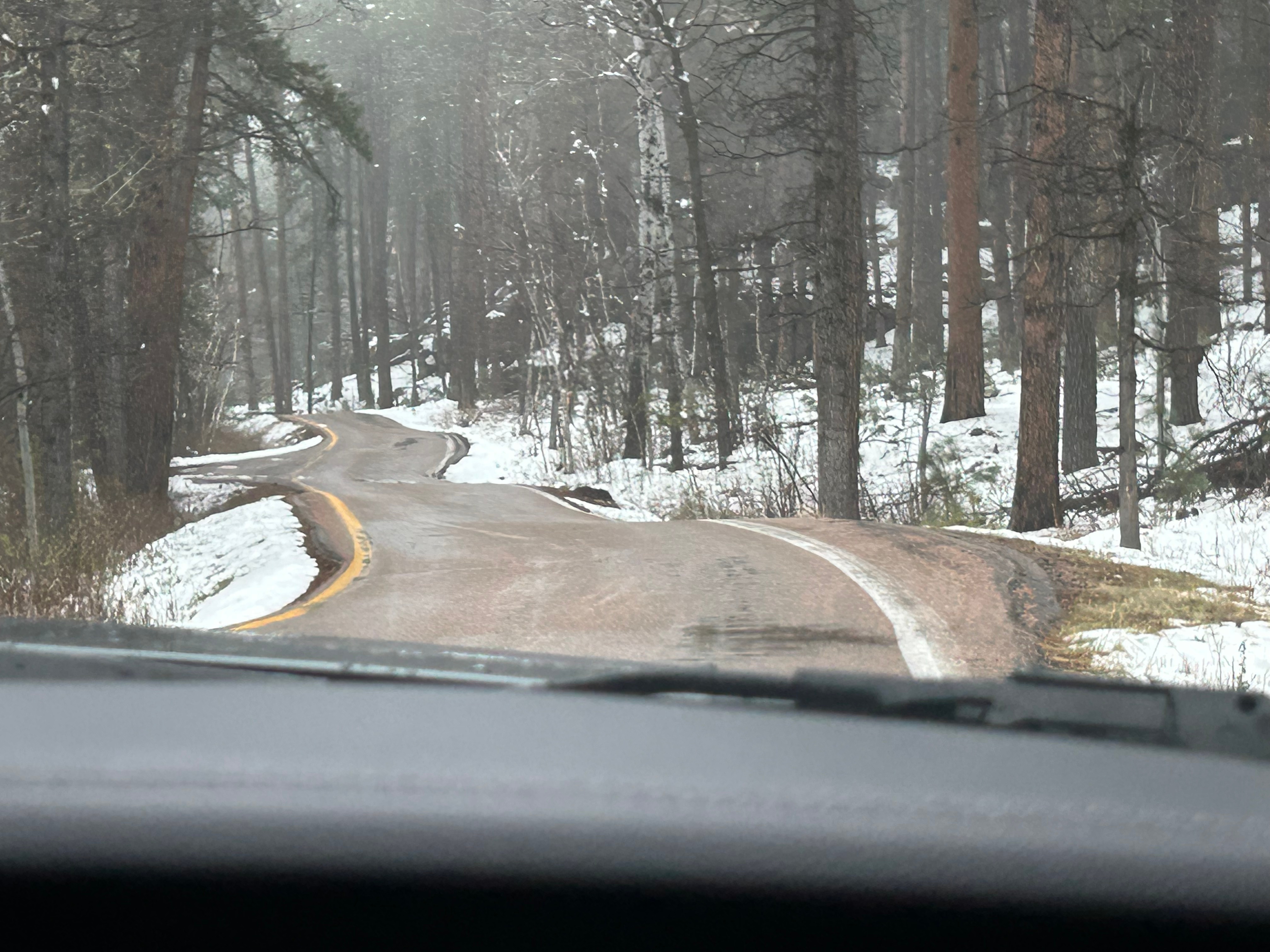
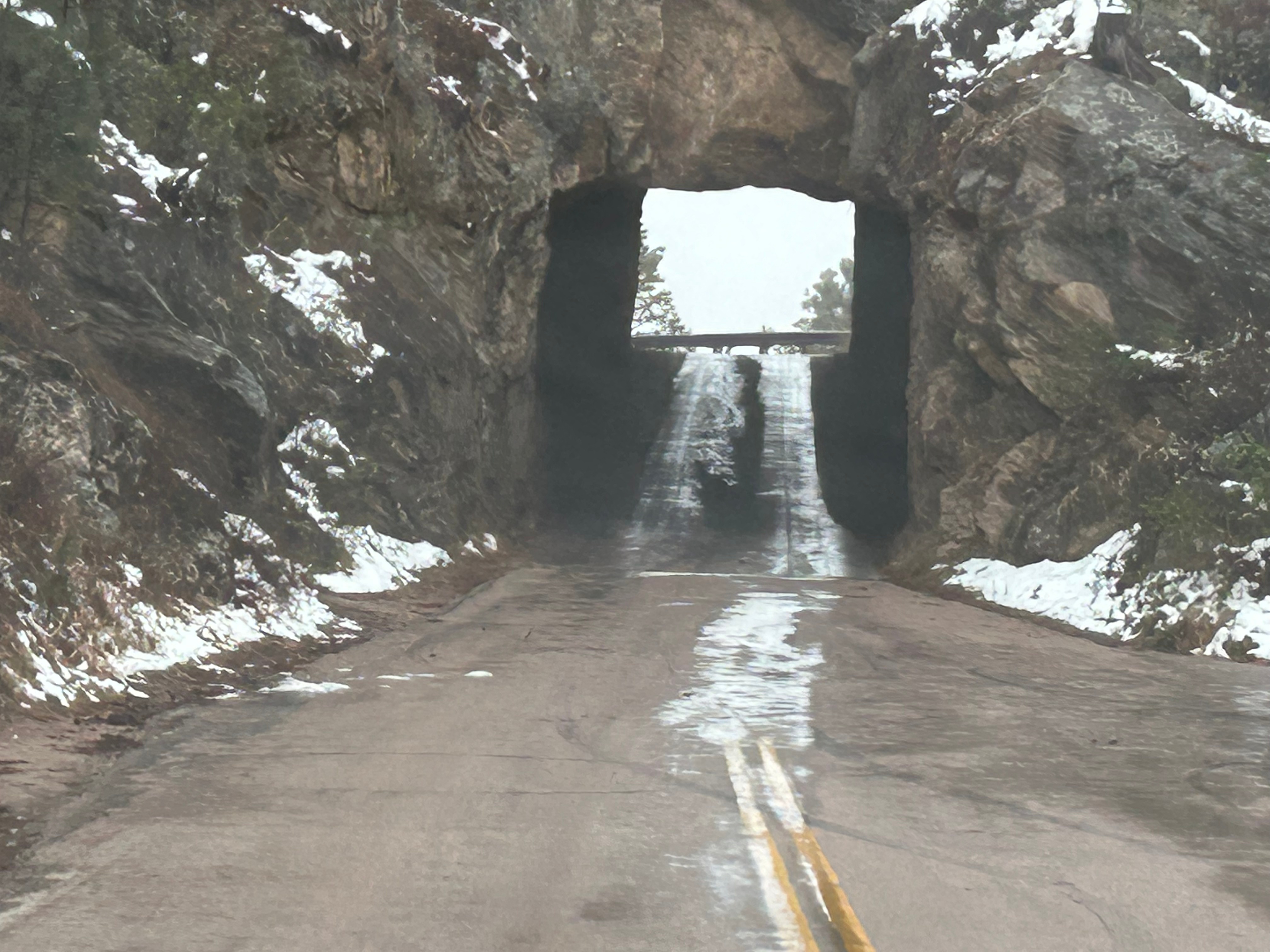
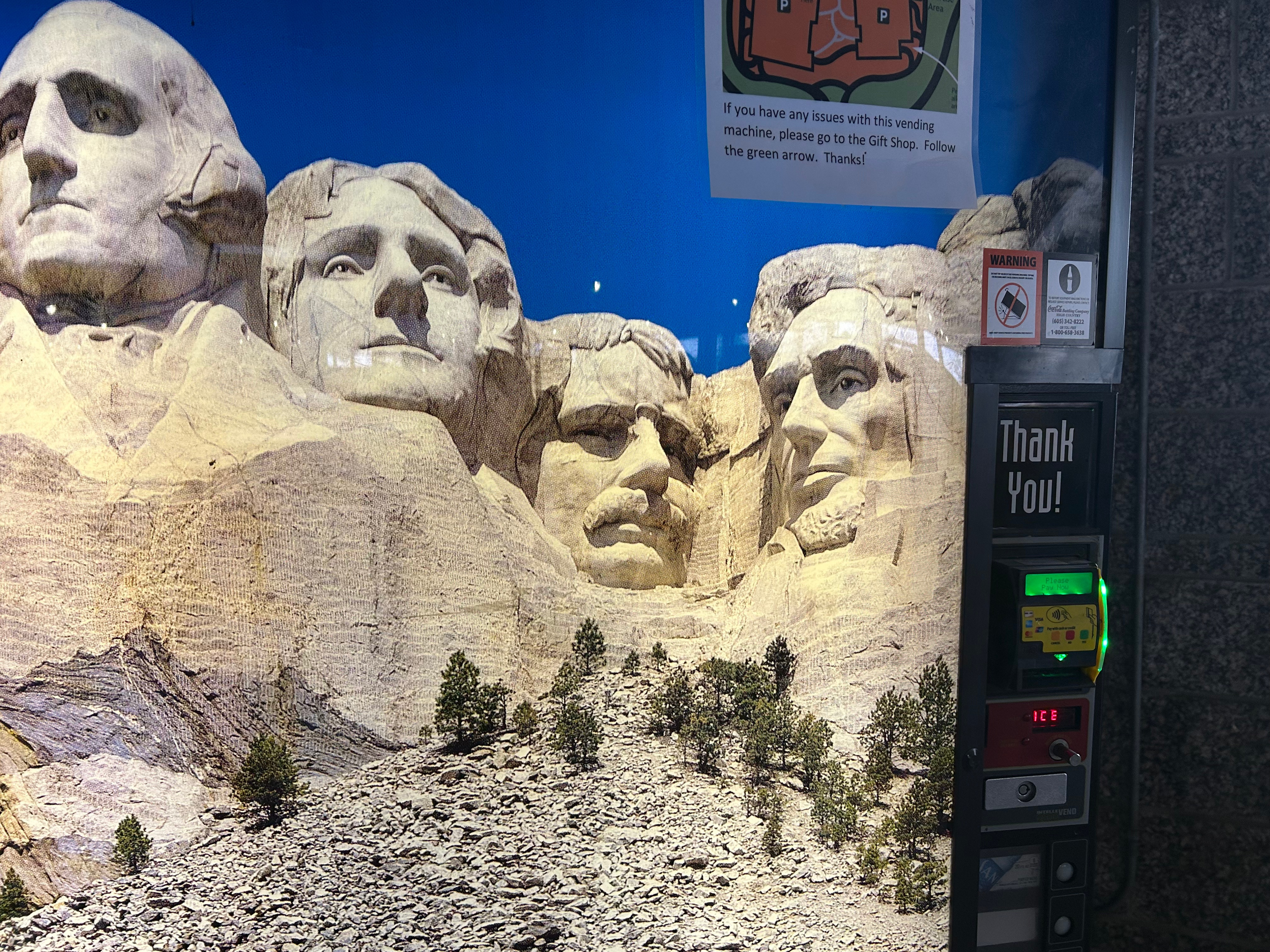
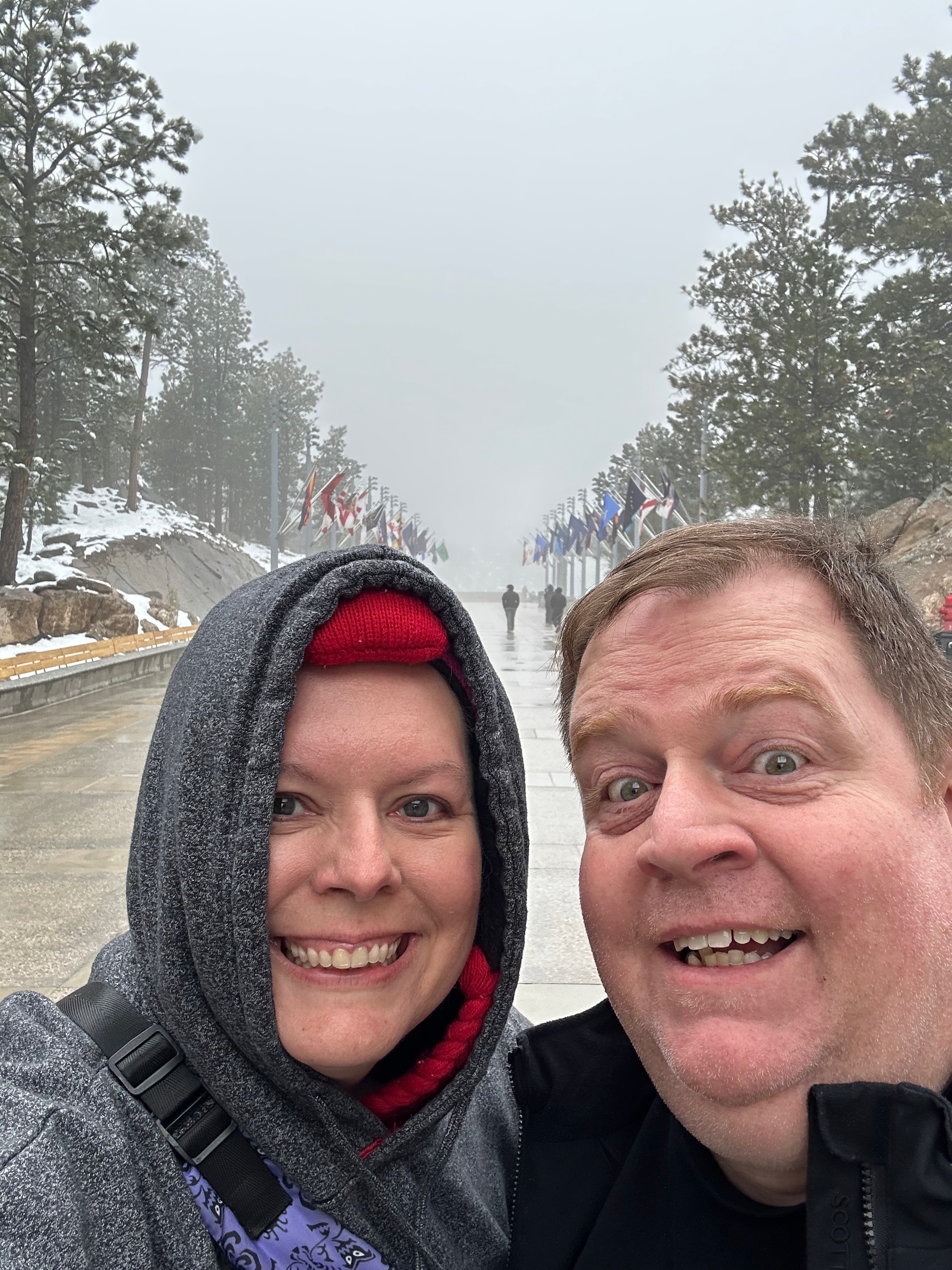
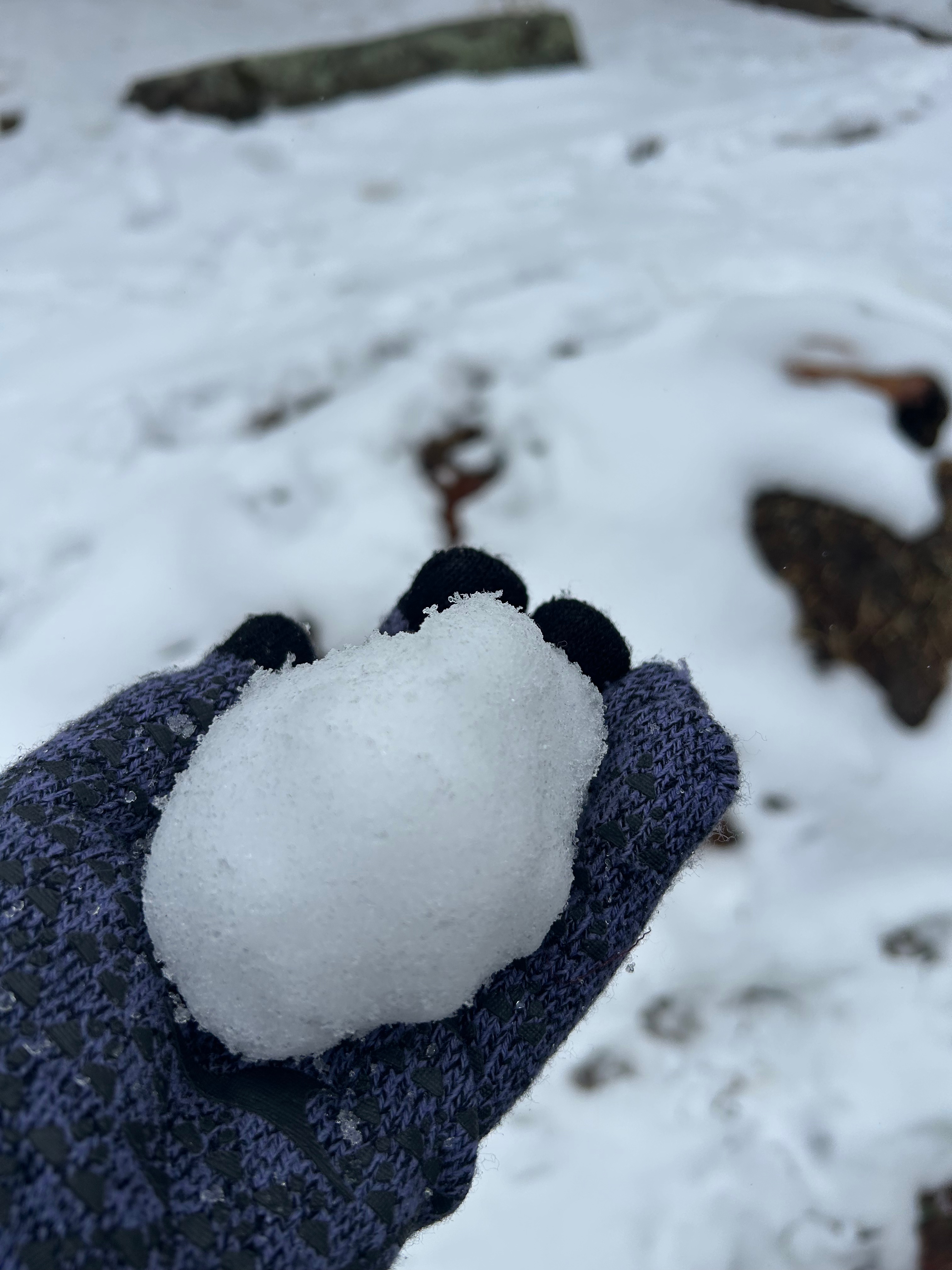
As you may have noticed from the pictures, there was no iconic Mount Rushmore view through a tunnel. There were just too many clouds. No problem, we were going to see Mount Rushmore up close after driving this road. Well, fun fact, you apparently don’t get all that close to Mount Rushmore, as we found out after paying $10 (since it’s not included in the National Park Pass, for some reason). We navigated the massive parking system, walked up through snow and slush, and were sorely disappointed at the wall of dense clouds. Ah well, we got a picture of the monument off the drink machines and I got to make a snowball, so all was not lost.
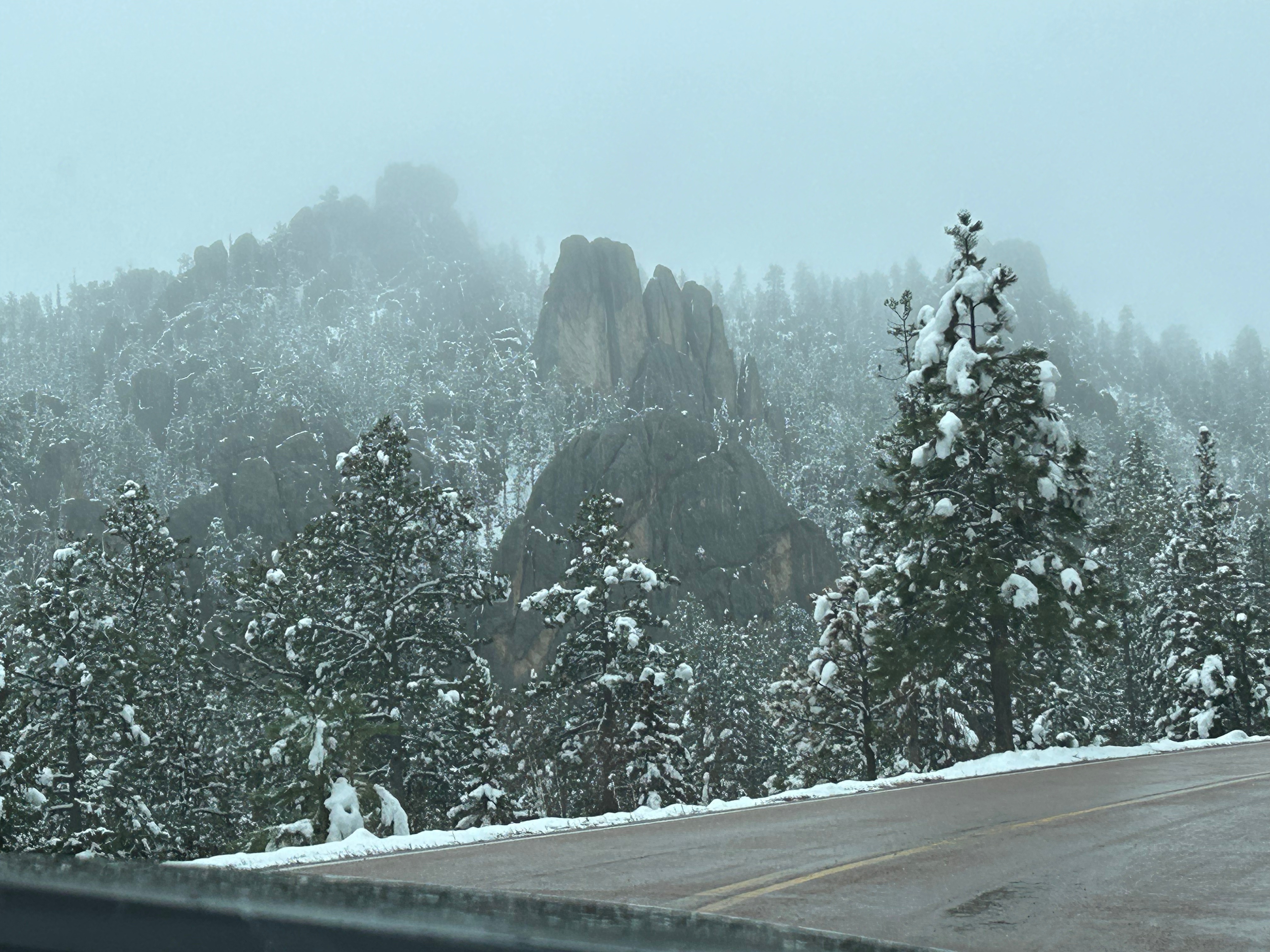
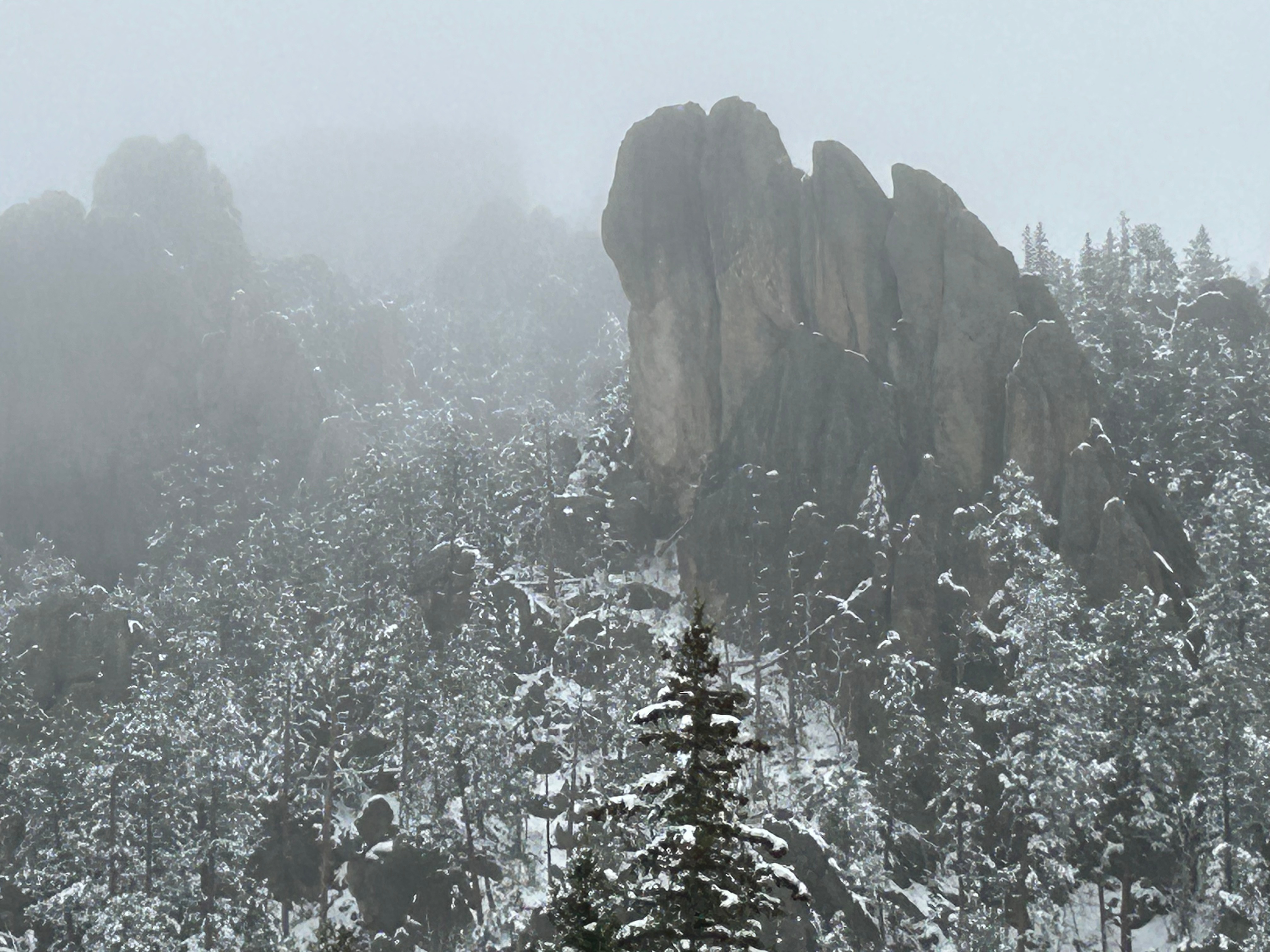
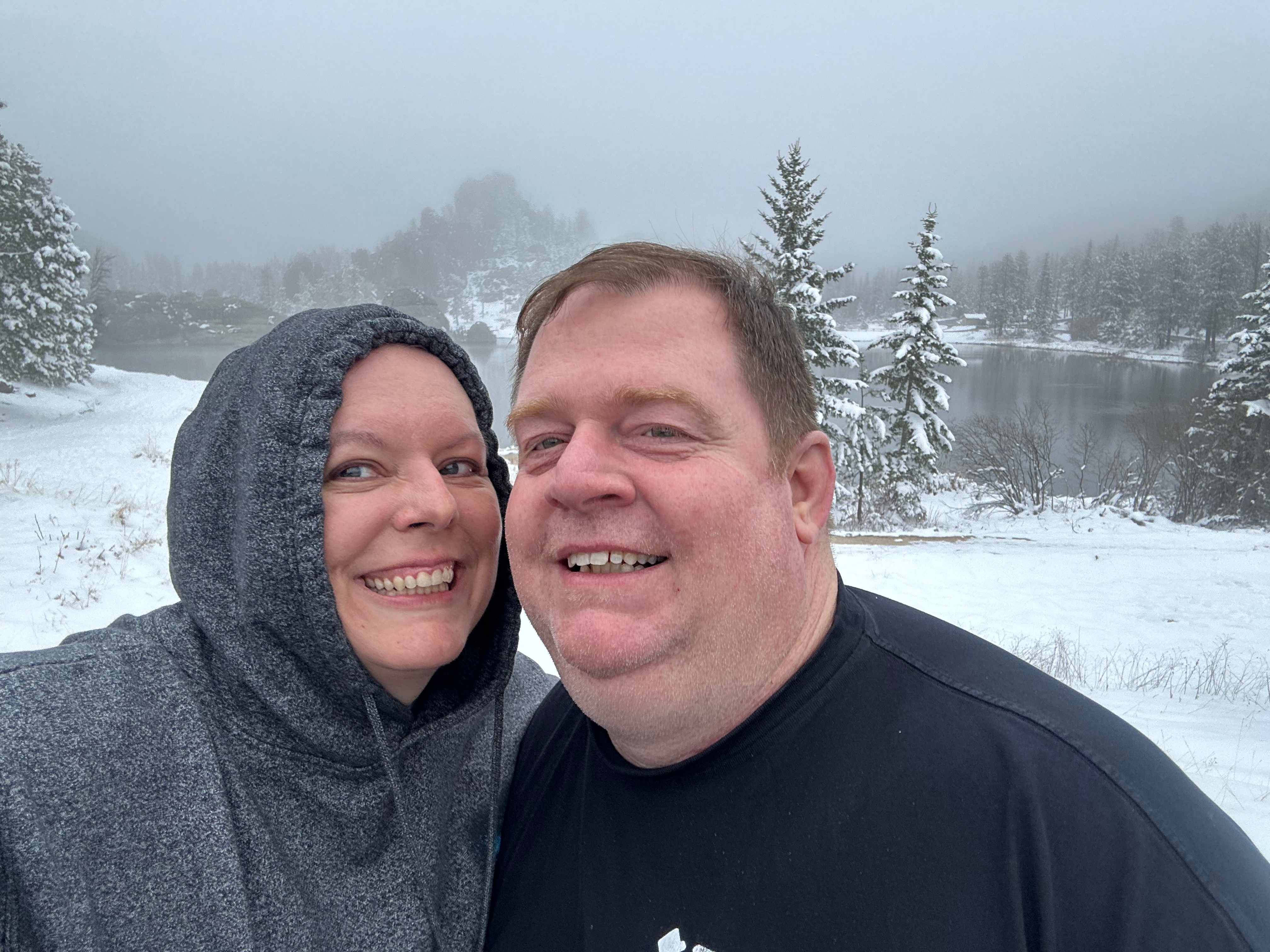
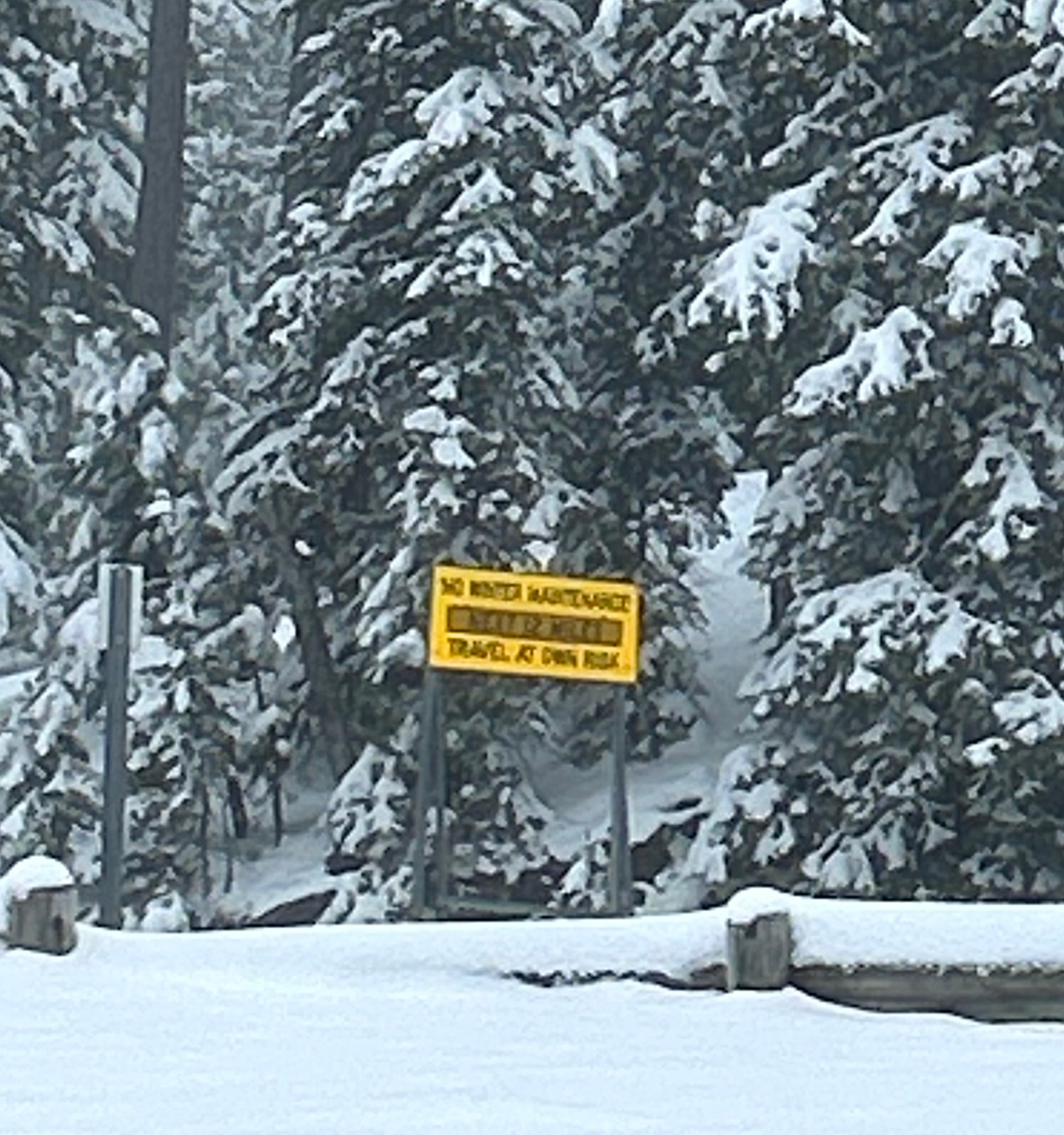
Next up was the second road we wanted to experience…Needles Highway. This 14-mile scenic drive is known for 1000 foot granite spires, tight hairpin turns, and an even narrower tunnel than on the Iron Mountain Road. We started on this road despite the heavy snow around us because the roads looked similar to the prior roads (wet but not slick). We went past a beautiful wintry lake, through the Needles Eye tunnel (9’8″ tall by 8’9″ wide), and drove past jaw-dropping rock formations. As we went up, the temps dropped and it started lightly snowing. Thom was pondering turning back when we passed a sign that said “No Winter Maintenance–Travel at Your own Risk”. That pretty much settled it, and by the time we could find a pull-off (to turn around in), the roads were noticeably slick. Seemed like it was time to go check into the hotel and watch the snow fall from a safe, warm spot.